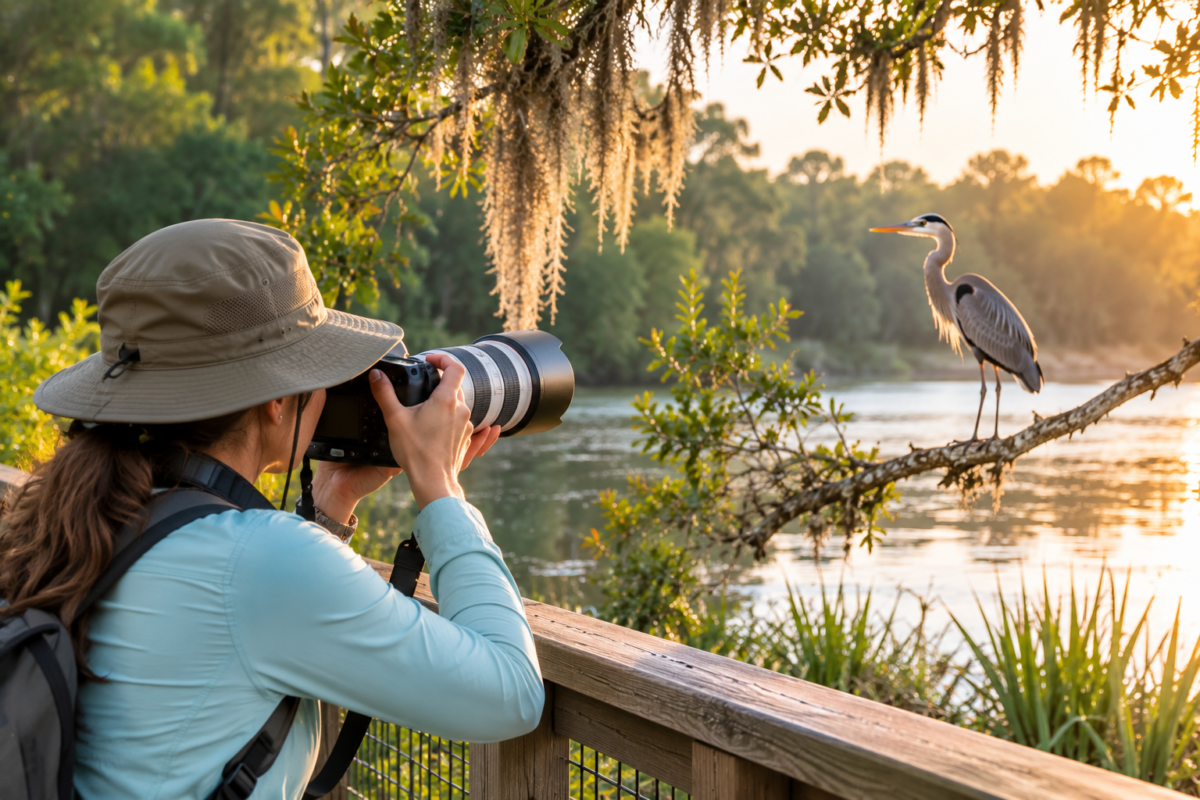
The Ultimate Wildlife Photography Guide for Nature Coast Visitors

Florida’s Nature Coast gives photographers plenty to work with. Rivers, wetlands, wooded areas, coastal habitats, and open spaces support a wide range of birds and other wildlife, making the region an appealing destination for anyone interested in wildlife photography in Florida.

You don’t need professional equipment to enjoy it either. A DSLR, mirrorless camera, compact camera, or even a modern smartphone can all produce memorable images when you understand light, timing, composition, and, most importantly, how to photograph wildlife responsibly.

If you’re staying around Inglis, use these tips to make the most of your photography outings.

Start Early or Head Out Near Sunset

Timing can make a major difference in wildlife photography in Florida.

Many animals become more active during the cooler parts of the day, especially around dawn and dusk. Florida State Parks specifically recommends these periods for wildlife spotting because animals may rest more during the hottest daytime hours.

Early and late daylight can also improve your photographs.

Softer light tends to create more pleasing shadows and can bring out detail in feathers, fur, trees, and water without the harsh contrast you may encounter around midday.

An early morning near the Withlacoochee River can therefore provide benefits for both wildlife activity and photography conditions.

Learn to Slow Down

Wildlife photography rewards patience.

Instead of rushing along a trail searching for animals, walk quietly and pay attention to your surroundings.

Look for movement in trees, reflections on the water, tracks, feathers, nests, and other clues that wildlife may be nearby. Florida State Parks recommends watching for signs of animal activity because you may recognize what lives in an area even before you see the animal itself.

Often, simply remaining still for a few minutes gives animals time to resume normal activity.

Use a Longer Lens When Possible

A telephoto or zoom lens is particularly useful for wildlife photography in Florida because it allows you to photograph animals without moving too close.

You don’t need the most expensive professional lens available. Even moderate zoom can make a significant difference when photographing birds in trees or wildlife across the water.

If you’re using a smartphone, avoid getting physically closer simply because the subject appears small on the screen. Use optical zoom if your phone provides it, or photograph the animal within the wider environment instead.

A photograph showing an animal in its natural habitat can sometimes be more interesting than a tightly cropped portrait.

Keep a Respectful Distance

Getting the photograph should never be more important than the animal’s welfare.

The Florida Fish and Wildlife Conservation Commission explains that approaching wildlife too closely can interrupt feeding, nesting, resting, and other important behaviors. If an animal stops what it is doing, begins watching you closely, moves away, acts agitated, or changes its behavior, those can be signs that you’re too close.

Florida State Parks similarly advises visitors to observe animals from a respectful distance.

That principle is especially important around nests, young animals, and wildlife near waterways.

A longer lens and patience are much better tools than taking another few steps toward your subject.

Photograph Birds Around Water and Woodlands

Birds make excellent subjects for visitors beginning with wildlife photography in Florida.

The Nature Coast’s mix of rivers, wetlands, forests, and coastal habitats creates opportunities to photograph different species in different settings.

Rather than focusing only on close-up portraits, try photographing birds as part of their environment.

A wading bird reflected in calm water, a raptor perched above a river, or a smaller bird framed by native vegetation can tell more of a story about the place you’re visiting.

Binoculars can also help you locate wildlife before deciding whether there is a worthwhile photograph to make. Florida State Parks recommends carrying binoculars for wildlife viewing from a distance.

Use the Withlacoochee River as a Photography Location

The Withlacoochee River and nearby recreation areas provide plenty of natural scenery.

You might photograph birds around the water, reflections during a calm morning, vegetation lining the shoreline, or wildlife encountered while exploring nearby trails.

If you’re building an itinerary, Village Pines’ guide to Withlacoochee River activities can be paired with a photography outing so that paddling, hiking, fishing, and wildlife watching become part of the same trip.

You can also learn more about the river’s connection with the community through the campground’s article on the history of Inglis, Florida.

Don’t Ignore Landscapes and Habitat

Wildlife photographs don’t always need an animal filling the entire frame.

Including habitat can give your image context.

A bird beside the river, an animal moving beneath live oaks, or a butterfly surrounded by native plants shows viewers something about the Nature Coast rather than simply documenting a species.

This approach can also be useful when your camera or phone doesn’t have enough zoom for close-up wildlife photography.

Learn Your Smartphone Camera

Phones are now capable of producing impressive nature photographs.

Florida State Parks recommends learning your camera settings before you need them, keeping the lens clean, experimenting with different shooting heights, and choosing vertical or horizontal orientation depending on the subject.

Those are simple steps, but they matter.

Wildlife moments can disappear quickly. If you already know how to change exposure, focus, or zoom, you’ll be much less likely to miss the photograph while searching through menus.

Never Alter Habitat for a Photograph

Photography should leave the location exactly as you found it.

Florida State Parks prohibits damaging, rearranging, or disturbing natural features and wildlife habitat for photography. Visitors should also respect closed or restricted areas.

Avoid moving branches, approaching nests, feeding animals, or trying to force wildlife into a more convenient position.

The goal is to document natural behavior rather than create it.

Let the Nature Coast Surprise You

The unpredictability of wildlife is what makes wildlife photography in Florida so rewarding.

You may head out hoping to photograph one species and encounter something completely different. Some outings may produce dramatic photographs, while others may simply give you a peaceful morning near the river.

Village Pines includes wildlife viewing among the outdoor experiences available around the campground, making photography easy to incorporate into an RV stay.

Bring your camera, give yourself time, and let the Nature Coast provide the subjects.
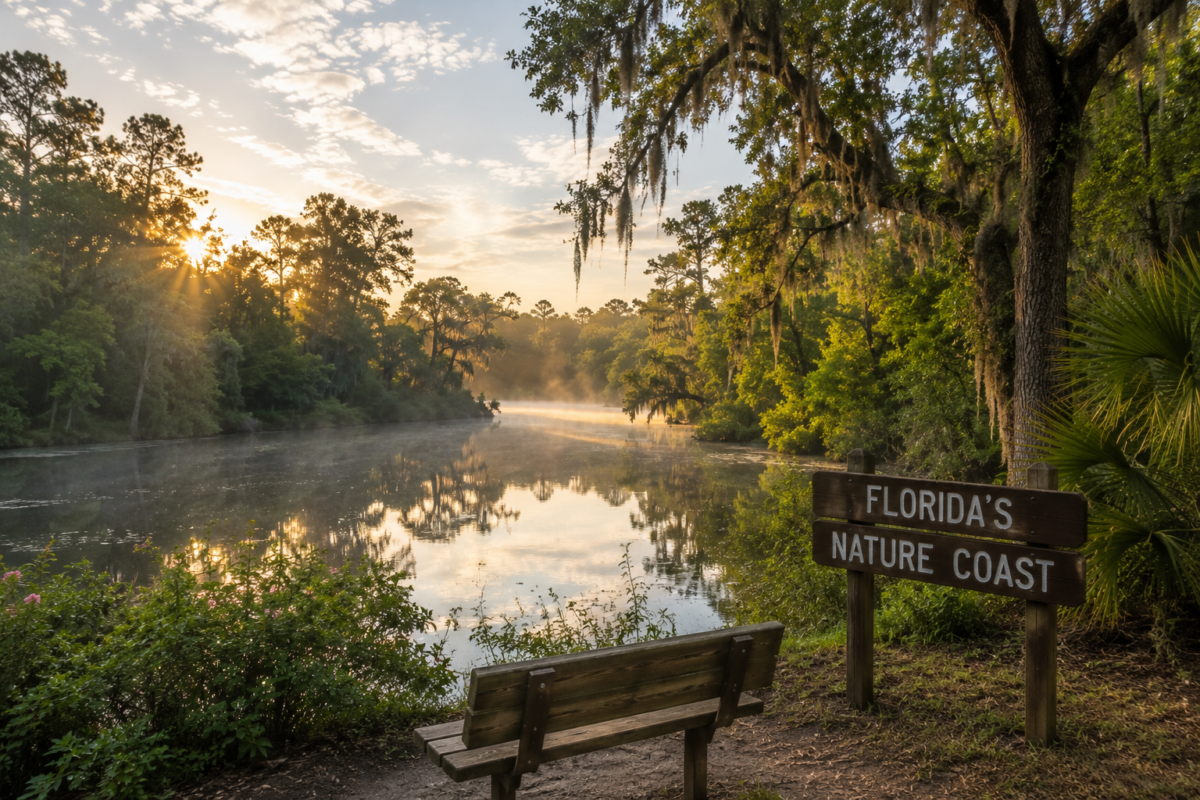
Exploring the Withlacoochee River: A Nature Lover’s Guide

Florida’s Nature Coast is filled with places where rivers, forests, wetlands, and wildlife come together, and the Withlacoochee River is one of the area’s defining natural features. For travelers staying near Inglis, exploring the river provides an opportunity to experience a quieter and more natural side of Florida.

There are plenty of Withlacoochee River activities to choose from, whether you prefer fishing from the shoreline, launching a kayak, looking for wildlife, or simply enjoying a walk near the water.

If you’re planning an RV trip to Inglis, here are some ways to make the Withlacoochee River part of your stay.

1. Go Fishing Along the Withlacoochee

Fishing is one of the most popular Withlacoochee River activities, and the area around Inglis provides opportunities to encounter both freshwater and saltwater species.

The Inglis Bypass Recreation Area connects with the Lower Withlacoochee River, which continues downstream through Inglis and Yankeetown toward the Gulf. Florida State Parks notes that fishing for both fresh and saltwater species is popular around the bypass.

At the Inglis Dam & Island Recreation Area, anglers can fish around Lake Rousseau on the upstream side or explore the waters downstream of the dam.

Before fishing, remember to check current Florida fishing regulations and licensing requirements.

2. Explore the Water by Kayak or Canoe

Paddling gives you an entirely different perspective of the river.

Instead of observing the landscape from shore, you can move through the water at your own pace while keeping an eye out for birds and other wildlife.

The Inglis Dam & Island Recreation Area includes a boat ramp that also serves as a canoe and kayak launch. It provides access to a section of the Withlacoochee below the main dam and spillway.

Conditions on rivers can change, so paddlers should always check weather, water conditions, and local guidance before setting out.

3. Bring Your Binoculars for Birdwatching

Not every river adventure needs to take place on the water.

Birdwatching is another accessible activity around the Withlacoochee. The combination of water, trees, wetlands, and open spaces creates opportunities to observe a variety of birds.

At the Inglis Bypass Recreation Area, visitors may spot wading birds, raptors, and black vultures.

Early morning can be an especially enjoyable time to explore. The temperatures may be more comfortable, recreational areas can be quieter, and you can take your time observing the landscape.

4. Watch for Florida Wildlife

Wildlife viewing is one reason Nature Coast visitors return to outdoor areas again and again.

You never know exactly what you’ll encounter.

Florida State Parks notes that manatees are occasionally seen downstream of Inglis Dam during warmer months. While wildlife sightings are never guaranteed, keeping a respectful distance and allowing animals to behave naturally makes the experience better for everyone.

A camera or pair of binoculars can be useful even if wildlife photography isn’t the main purpose of your trip.

5. Explore Nearby Trails

Some of the best Withlacoochee River activities happen alongside the water rather than on it.

The Inglis area offers opportunities for walking, hiking, and biking. The Bypass Recreation Area has grass paths along the bypass canal, while the Inglis Lock Recreation Area provides access to hiking and biking opportunities associated with the Cross Florida Greenway.

A trail walk can be a good alternative when you want to explore but don’t want to spend an entire day fishing or paddling.

6. Slow Down and Enjoy the Scenery

It’s easy to think that an outdoor vacation needs to be filled with activities. Sometimes the best part is simply having enough time to stop.

A picnic beside the water, a quiet morning watching birds, or an afternoon photographing the landscape can be just as memorable as a full itinerary.

The river has also played an important role in the area’s past. Village Pines’ article about the history of Inglis, Florida explains how the community’s location near the Withlacoochee helped shape its development.

Understanding that history can add another layer to what you see while exploring the area today.

Make the Withlacoochee Part of Your RV Trip

One advantage of RV camping near Inglis is that you don’t have to experience the Nature Coast in a single day.

You can fish one morning, explore a trail the next afternoon, and return to the water later in your trip.

When you’re staying nearby at Village Pines, these Withlacoochee River activities can become part of a relaxed outdoor vacation rather than something you have to squeeze into a busy itinerary.

The Rise of Nature-Based Travel in 2026 and Why Florida’s Nature Coast Is Leading the Trend

For many travelers, the ideal vacation in 2026 looks less like a crowded attraction and more like a quiet river, hiking trail, wildlife encounter, or evening spent outdoors.

Nature-based travel has become an increasingly important part of how people choose destinations. Rather than filling every day with scheduled attractions, travelers are looking for places where the landscape itself becomes part of the experience.

Research backs up the trend. KAYAK’s 2026 travel report found that 63% of U.S. travelers surveyed said natural wonders would guide their travel plans, while nature trips ranked among the top three vacation choices for Gen Z.

For RV travelers interested in this slower, more outdoor-focused style of vacation, Florida’s Nature Coast is particularly well suited.

What Is Nature-Based Travel?

Nature-based travel refers to trips centered partly or primarily around natural environments.

It can include adventurous activities, but it doesn’t have to mean strenuous outdoor recreation. A nature-focused vacation might involve:

  • Hiking through a natural area
  • Paddling a river
  • Fishing
  • Birdwatching and wildlife viewing
  • Nature photography
  • Exploring springs and wetlands
  • Watching the sunset from your campsite

The emphasis is on experiencing the destination’s natural surroundings rather than moving between heavily developed attractions.

That flexibility makes nature travel suitable for families, couples, retirees, solo RV travelers, and people simply looking for a quieter vacation.

Why Nature-Based Travel Is Growing in 2026

One reason for the growth is that travelers increasingly want experiences that feel memorable and connected to a particular destination.

KAYAK’s research also points to the growth of “soft adventures,” where travelers combine activities such as hiking, cycling, or paddleboarding with comfortable accommodation and time to relax.

Another 2026 travel forecast found that 40% of surveyed travelers wanted to visit national parks and wilderness areas during the year, with interest rising to 44% among Gen Z respondents.

This is an important shift. Outdoor travel doesn’t necessarily mean choosing between comfort and adventure anymore. Travelers increasingly want both.

Florida’s Nature Coast Fits the Trend Naturally

Florida’s Nature Coast offers a very different experience from the theme parks, resorts, and densely developed destinations for which the state is often known.

Around Inglis, travelers can explore rivers, woodlands, wetlands, coastal environments, and wildlife habitats.

The area’s history has also been shaped by those natural resources. As explained in Village Pines’ guide to the history of Inglis, Florida, the Withlacoochee River influenced transportation and local development long before outdoor tourism became part of the community’s identity.

Today, many of those same landscapes attract visitors for completely different reasons.

Rivers Create Opportunities for Outdoor Adventure

The Withlacoochee River is one of the area’s most recognizable natural features.

Nearby public recreation areas provide opportunities for fishing, paddling, hiking, birding, and wildlife viewing. The Florida State Parks guide to Inglis Dam & Island Recreation Area, for example, lists boating, fishing, hiking, birding, and wildlife viewing among the available experiences.

The nearby Inglis Bypass Recreation Area also offers fishing, birding, walking, biking, and picnic facilities.

These aren’t attractions that require an entire day to be planned around them. Visitors can choose their own pace.

Wildlife Makes Every Visit Different

Wildlife is another reason nature-based travel appeals to repeat visitors.

Unlike a scheduled attraction, nature never provides exactly the same experience twice. One morning may bring an interesting bird sighting, while another day could produce an unexpected encounter along the water.

Even slowing down enough to listen to birds around your campsite can become part of the trip.

Village Pines itself promotes wildlife viewing as one of the outdoor experiences available to guests, complementing the wider recreational opportunities found around Inglis.

RV Travel and Nature-Based Vacations Work Well Together

RV camping makes it possible to stay close to outdoor destinations while retaining many everyday comforts.

Instead of visiting a natural area for a few hours before returning to a busy city, travelers can make the outdoor environment part of their entire stay.

At Village Pines, guests can combine that experience with practical campground amenities including WiFi, a bath house, laundry facilities, RV hookups, a clubhouse, and a dump station.

That balance reflects another major element of the 2026 travel trend: people want access to nature without necessarily giving up convenience.

Experience Another Side of Florida

Florida will always be famous for beaches and theme parks, but those aren’t the state’s only vacation experiences.

The Nature Coast offers rivers, forests, wildlife, fishing, paddling, trails, and smaller communities where visitors can experience Florida at a different pace.

For travelers embracing nature-based travel in 2026, that combination is increasingly appealing.

A stay in Inglis provides a convenient opportunity to explore the landscapes that have shaped this part of Florida for generations. Whether your ideal day involves fishing on the river, looking for wildlife, exploring a trail, or simply relaxing beneath the trees at your RV site, the Nature Coast makes it easy to build a vacation around the outdoors.

The History of Inglis Florida: From River Community to Outdoor Recreation Hub

Florida is full of communities with unique stories, and Inglis is one of them. Inglis, Florida’s history is closely tied to the area’s rivers, woodlands, and Gulf Coast. Tourism was changing larger cities at a quick pace, but Inglis remained a tiny village where the outdoors and natural beauty continued to shape daily life. 

Today, people visit the town for boating, fishing, hiking, and RV camping on Florida’s Nature Coast, but its story began long before tourism. Guests visiting Village Pine will be able to enjoy the history and the outdoor attractions that make this portion of Levy County special.

Early Life Along the Withlacoochee River

Long before any modern highways were built in the area, the Withlacoochee River was an important part of life for the people who lived here. The river offered transportation, access to natural resources, and links to the Gulf waters.

European-American settlement expanded during the nineteenth century and the surrounding area supported activities such as forestry, agriculture, and fishing. The river made travel and trading simpler. Small communities sprang up slowly along the river .

Inglis evolved as a quiet rural community, not a huge business centre. That slower pace of growth meant much of the area’s natural scenery was preserved, something visitors still enjoy today. 

A Community Shaped by Nature

The environment has always been a part of Inglis’ life. Rivers, woodlands, wetlands, and adjacent coastal waters remain vital to outdoor recreation that draws locals and visitors year-round.

This strong interaction with nature remains one of the town’s defining qualities.

A New Chapter in the History of Inglis Florida

One of the major events in the history of Inglis, Florida, was the development of the Cross Florida Barge Canal project throughout the twentieth century.

The canal was never completed statewide, but some structures built near Inglis became permanent landmarks. Today, the Inglis Lock and Inglis Dam remain significant features of the area, and the dam formed Lake Rousseau. There are popular sites for freshwater fishing and boating.

Today, people use much of the existing infrastructure for recreation and public access to outdoor areas instead of commercial shipping.

Lasting Benefits for Visitors

Today, travellers have many recreation opportunities associated with these developments, including:

  • Boating on the Withlacoochee River
  • Fishing for freshwater on Lake Rousseau.
  • Walking and bicycling on parts of the Marjorie Harris Carr Cross Florida Greenway
  • Wildlife watching in nearby natural areas. 

These attractions have been key to showing many visitors a quieter side of Florida’s Gulf Coast.

From a Working Community to an Outdoor Destination

Inglis gradually shifted from traditional industries toward outdoor recreation and tourism. It’s also near rivers, marshes, and Gulf waters, so it’s a great place to visit for those who like to be outside.

Nearby, the Withlacoochee Gulf Preserve has walking trails, boardwalks, and observation towers overlooking coastal marshes. People come to observe wildlife, photograph natural scenery, and enjoy the quiet surroundings that are so much a part of the Nature Coast. 

Fishing is still one of the area’s most popular activities. Florida fishing adventures and Nature Coast RV camping are top options for many travelers thanks to public boat ramps that offer easy access to freshwater and coastal waterways. 

Inglis Florida: A Town That Has Kept Its Identity

Unlike many Florida villages that have quickly urbanized, Inglis has preserved its small-town feel. Local parks, small businesses, and outdoor leisure continue to be vital to community life.

Nearby Yankeetown adds to the area’s attractiveness, providing another insight into Florida’s coastal legacy. These neighboring communities offer visitors an authentic experience that has become increasingly difficult to find in the more developed states.

That blend of history and nature still attracts travelers in search of a different kind of Florida vacation.

Discover Inglis While Staying at Village Pine

Village Pine is a great site for those wanting to see the history of Inglis, Florida, as well as the area’s outdoor activities. There are local parks to enjoy; you may launch a boat on the river, hike the local trails, or take a quiet drive around Levy County.

Knowing the history of Inglis Florida adds another dimension to each visit. From its early ties to the Withlacoochee River to its present-day status as an outdoor recreation destination, the town captures the timeless allure of Florida’s Nature Coast. Whether you’re a local history buff or just seeking a calm RV break, Inglis offers an experience that blends legacy, nature, and hospitality in one unique spot. 

​

Where outdoor enthusiasts and nature lovers alike can indulge in a perfect blend of relaxation and adventure.