The Ultimate Wildlife Photography Guide for Nature Coast Visitors

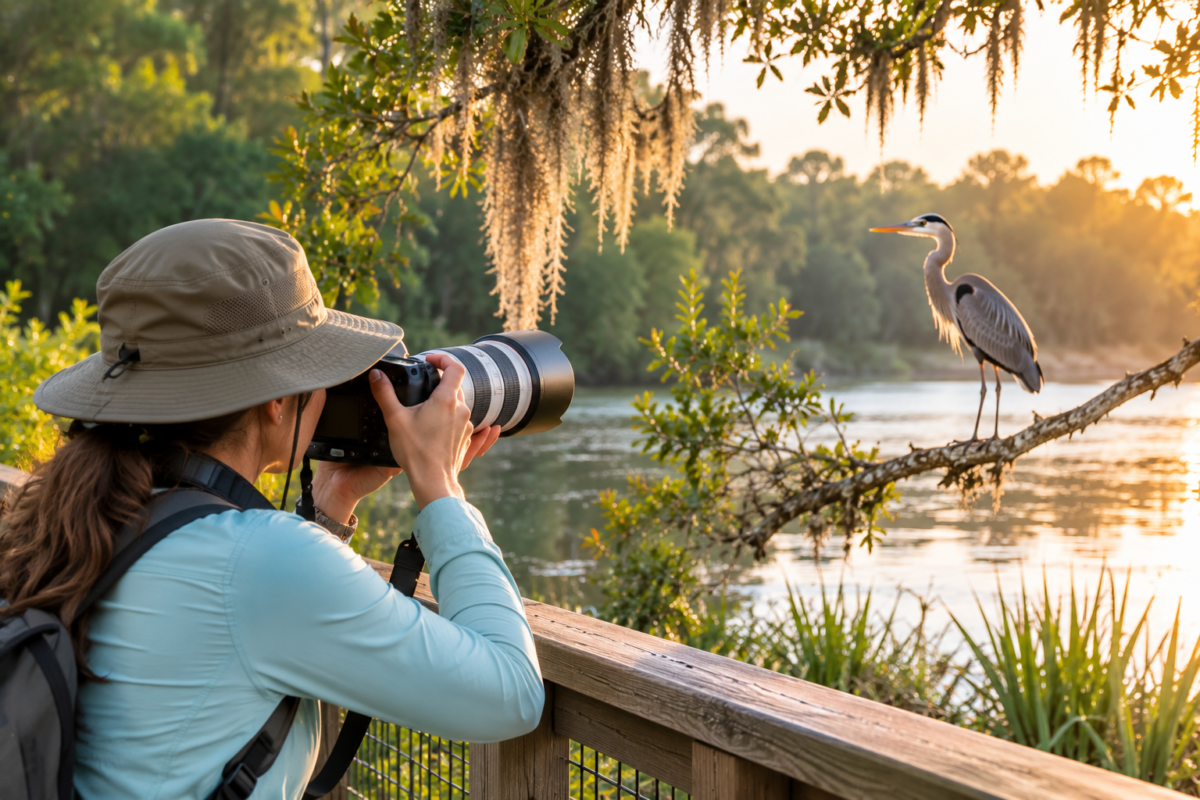
Florida’s Nature Coast gives photographers plenty to work with. Rivers, wetlands, wooded areas, coastal habitats, and open spaces support a wide range of birds and other wildlife, making the region an appealing destination for anyone interested in wildlife photography in Florida.
You don’t need professional equipment to enjoy it either. A DSLR, mirrorless camera, compact camera, or even a modern smartphone can all produce memorable images when you understand light, timing, composition, and, most importantly, how to photograph wildlife responsibly.
If you’re staying around Inglis, use these tips to make the most of your photography outings.
Start Early or Head Out Near Sunset
Timing can make a major difference in wildlife photography in Florida.
Many animals become more active during the cooler parts of the day, especially around dawn and dusk. Florida State Parks specifically recommends these periods for wildlife spotting because animals may rest more during the hottest daytime hours.
Early and late daylight can also improve your photographs.
Softer light tends to create more pleasing shadows and can bring out detail in feathers, fur, trees, and water without the harsh contrast you may encounter around midday.
An early morning near the Withlacoochee River can therefore provide benefits for both wildlife activity and photography conditions.
Learn to Slow Down
Wildlife photography rewards patience.
Instead of rushing along a trail searching for animals, walk quietly and pay attention to your surroundings.
Look for movement in trees, reflections on the water, tracks, feathers, nests, and other clues that wildlife may be nearby. Florida State Parks recommends watching for signs of animal activity because you may recognize what lives in an area even before you see the animal itself.
Often, simply remaining still for a few minutes gives animals time to resume normal activity.
Use a Longer Lens When Possible
A telephoto or zoom lens is particularly useful for wildlife photography in Florida because it allows you to photograph animals without moving too close.
You don’t need the most expensive professional lens available. Even moderate zoom can make a significant difference when photographing birds in trees or wildlife across the water.
If you’re using a smartphone, avoid getting physically closer simply because the subject appears small on the screen. Use optical zoom if your phone provides it, or photograph the animal within the wider environment instead.
A photograph showing an animal in its natural habitat can sometimes be more interesting than a tightly cropped portrait.
Keep a Respectful Distance
Getting the photograph should never be more important than the animal’s welfare.
The Florida Fish and Wildlife Conservation Commission explains that approaching wildlife too closely can interrupt feeding, nesting, resting, and other important behaviors. If an animal stops what it is doing, begins watching you closely, moves away, acts agitated, or changes its behavior, those can be signs that you’re too close.
Florida State Parks similarly advises visitors to observe animals from a respectful distance.
That principle is especially important around nests, young animals, and wildlife near waterways.
A longer lens and patience are much better tools than taking another few steps toward your subject.
Photograph Birds Around Water and Woodlands
Birds make excellent subjects for visitors beginning with wildlife photography in Florida.
The Nature Coast’s mix of rivers, wetlands, forests, and coastal habitats creates opportunities to photograph different species in different settings.
Rather than focusing only on close-up portraits, try photographing birds as part of their environment.
A wading bird reflected in calm water, a raptor perched above a river, or a smaller bird framed by native vegetation can tell more of a story about the place you’re visiting.
Binoculars can also help you locate wildlife before deciding whether there is a worthwhile photograph to make. Florida State Parks recommends carrying binoculars for wildlife viewing from a distance.
Use the Withlacoochee River as a Photography Location
The Withlacoochee River and nearby recreation areas provide plenty of natural scenery.
You might photograph birds around the water, reflections during a calm morning, vegetation lining the shoreline, or wildlife encountered while exploring nearby trails.
If you’re building an itinerary, Village Pines’ guide to Withlacoochee River activities can be paired with a photography outing so that paddling, hiking, fishing, and wildlife watching become part of the same trip.
You can also learn more about the river’s connection with the community through the campground’s article on the history of Inglis, Florida.
Don’t Ignore Landscapes and Habitat
Wildlife photographs don’t always need an animal filling the entire frame.
Including habitat can give your image context.
A bird beside the river, an animal moving beneath live oaks, or a butterfly surrounded by native plants shows viewers something about the Nature Coast rather than simply documenting a species.
This approach can also be useful when your camera or phone doesn’t have enough zoom for close-up wildlife photography.
Learn Your Smartphone Camera
Phones are now capable of producing impressive nature photographs.
Florida State Parks recommends learning your camera settings before you need them, keeping the lens clean, experimenting with different shooting heights, and choosing vertical or horizontal orientation depending on the subject.
Those are simple steps, but they matter.
Wildlife moments can disappear quickly. If you already know how to change exposure, focus, or zoom, you’ll be much less likely to miss the photograph while searching through menus.
Never Alter Habitat for a Photograph
Photography should leave the location exactly as you found it.
Florida State Parks prohibits damaging, rearranging, or disturbing natural features and wildlife habitat for photography. Visitors should also respect closed or restricted areas.
Avoid moving branches, approaching nests, feeding animals, or trying to force wildlife into a more convenient position.
The goal is to document natural behavior rather than create it.
Let the Nature Coast Surprise You
The unpredictability of wildlife is what makes wildlife photography in Florida so rewarding.
You may head out hoping to photograph one species and encounter something completely different. Some outings may produce dramatic photographs, while others may simply give you a peaceful morning near the river.
Village Pines includes wildlife viewing among the outdoor experiences available around the campground, making photography easy to incorporate into an RV stay.
Bring your camera, give yourself time, and let the Nature Coast provide the subjects.