Why More Travelers Are Trading Theme Parks for Outdoor Adventures

Florida may be famous for major theme parks, but not every traveler wants a vacation built around crowds, lines, tickets, and packed schedules.

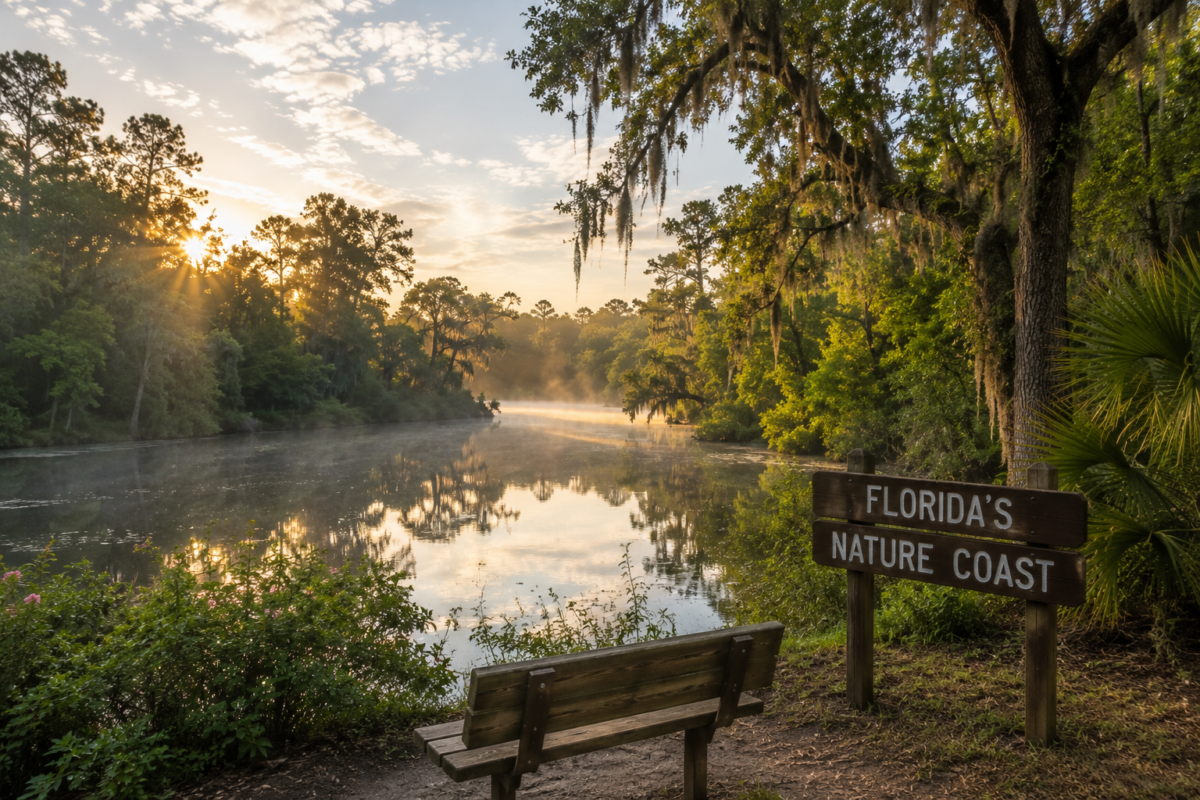
In 2026, more people are showing interest in vacations centered on natural environments and flexible experiences. That is helping outdoor adventure travel appeal to travelers who would rather spend the morning paddling a river, hiking a trail, fishing, watching wildlife, or simply relaxing outside.

For places such as Florida’s Nature Coast, this shift creates an opportunity to experience a very different side of the state.

Travelers Want More Nature in Their Vacations

Current travel research suggests that nature is becoming increasingly important in trip planning.

KAYAK’s 2026 travel report found that 63% of U.S. travelers surveyed said natural wonders would guide their travel plans, while 23% described themselves as adventure and nature seekers. It also found that one in four travelers were combining lighter outdoor activities with relaxation.

Expedia reported a similar shift during summer 2026. Interest in U.S. outdoor destinations such as lakes, mountains, and national parks increased 65% year over year.

That doesn’t mean theme parks are disappearing from travel plans. It does show that outdoor adventure travel is competing for a larger share of travelers’ vacation time.

Outdoor Trips Can Be More Flexible

One appeal of nature-focused vacations is flexibility.

A theme park visit often revolves around opening hours, reservations, ticket dates, wait times, and scheduled attractions.

Outdoor travel can feel very different.

You might wake up and decide to fish in the morning, walk a trail after lunch, photograph wildlife in the evening, or simply spend the afternoon at your campsite.

If the weather changes, the itinerary can change with it.

That flexibility can be especially appealing to RV travelers who already enjoy controlling the pace of their trip.

Adventure Doesn’t Have to Mean Extreme Sports

The word “adventure” sometimes brings to mind difficult climbs or physically demanding activities.

Modern outdoor adventure travel is much broader.

KAYAK’s 2026 report describes growing interest in “soft adventures,” where activities such as hiking, cycling, and paddleboarding are balanced with relaxation and comfortable accommodation.

For Nature Coast visitors, that might mean:

  • Fishing the Withlacoochee River
  • Paddling calm waterways
  • Hiking local trails
  • Photographing wildlife
  • Birdwatching
  • Exploring natural areas
  • Enjoying a picnic near the water

You can make the trip as active or relaxed as you want.

Travelers Are Looking Closer to Home

Another 2026 trend is the growing interest in domestic travel.

Expedia reported that 63% of travelers were planning domestic summer getaways, with driveable destinations and outdoor locations among the strongest areas of interest.

For RV travelers, that makes sense.

Driving your own accommodation gives you the ability to explore smaller communities and natural areas without depending on major tourism hubs.

Inglis provides that type of experience. Instead of building your trip around heavily developed attractions, you can use the town as a base for discovering rivers, forests, wildlife, and Florida’s Gulf Coast.

Village Pines’ article about the history of Inglis, Florida explains how the community has long been shaped by the Withlacoochee River and surrounding natural landscape.

Nature Provides Experiences That Can’t Be Scheduled

One reason outdoor trips feel memorable is that nature doesn’t follow a script.

You can’t schedule the exact moment a bird flies across the river or guarantee what wildlife you’ll encounter on a trail.

A sunrise will look different each morning. Fishing conditions change. Weather alters the landscape. Seasonal changes bring different sights.

That unpredictability makes each trip feel more personal.

The experience isn’t simply something you watch. You’re part of the environment while it happens.

RV Camping Supports Outdoor Adventure Travel

RV camping fits naturally with this style of vacation.

You can remain close to outdoor destinations while still having access to many everyday conveniences.

Village Pines offers WiFi, a bath house, laundry facilities, a clubhouse, hookups, and other amenities that can make it easier to balance time outdoors with a comfortable campground stay.

This combination reflects what many 2026 travelers appear to want: nature without necessarily giving up practical comfort.

Outdoor Vacations Can Also Encourage Slower Travel

A theme park vacation can sometimes create pressure to fit as much as possible into every day.

Nature-based trips give travelers permission to slow down.

You might spend an hour watching birds near the water or remain at the campsite longer because the evening is pleasant.

Expedia’s 2026 trend research has also highlighted growing interest in slower-paced destinations and nature-oriented experiences.

For travelers who return from traditional vacations feeling like they need another vacation, that slower pace has obvious appeal.

Discover Another Side of Florida

Theme parks will continue to be an important part of Florida tourism, but they aren’t the only way to experience the state.

Outdoor adventure travel opens the door to rivers, forests, Gulf Coast habitats, wildlife, fishing, paddling, and smaller communities that may otherwise be overlooked.

For RV travelers staying around Inglis, the Nature Coast provides plenty of opportunities to build a trip around those experiences.

Some days can be active. Others can be spent doing very little.

That freedom may be exactly why more travelers are looking beyond traditional attractions and heading outdoors.
The Ultimate Wildlife Photography Guide for Nature Coast Visitors

Florida’s Nature Coast gives photographers plenty to work with. Rivers, wetlands, wooded areas, coastal habitats, and open spaces support a wide range of birds and other wildlife, making the region an appealing destination for anyone interested in wildlife photography in Florida.

You don’t need professional equipment to enjoy it either. A DSLR, mirrorless camera, compact camera, or even a modern smartphone can all produce memorable images when you understand light, timing, composition, and, most importantly, how to photograph wildlife responsibly.

If you’re staying around Inglis, use these tips to make the most of your photography outings.

Start Early or Head Out Near Sunset

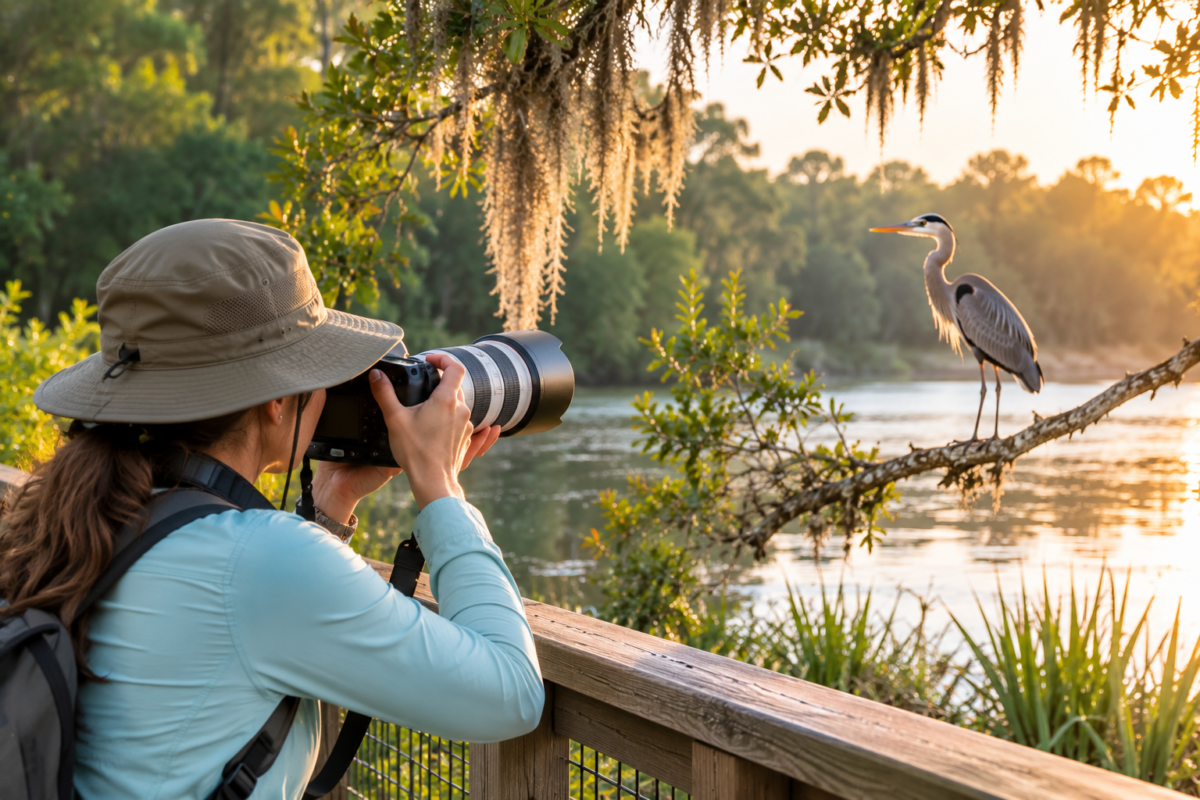
Timing can make a major difference in wildlife photography in Florida.

Many animals become more active during the cooler parts of the day, especially around dawn and dusk. Florida State Parks specifically recommends these periods for wildlife spotting because animals may rest more during the hottest daytime hours.

Early and late daylight can also improve your photographs.

Softer light tends to create more pleasing shadows and can bring out detail in feathers, fur, trees, and water without the harsh contrast you may encounter around midday.

An early morning near the Withlacoochee River can therefore provide benefits for both wildlife activity and photography conditions.

Learn to Slow Down

Wildlife photography rewards patience.

Instead of rushing along a trail searching for animals, walk quietly and pay attention to your surroundings.

Look for movement in trees, reflections on the water, tracks, feathers, nests, and other clues that wildlife may be nearby. Florida State Parks recommends watching for signs of animal activity because you may recognize what lives in an area even before you see the animal itself.

Often, simply remaining still for a few minutes gives animals time to resume normal activity.

Use a Longer Lens When Possible

A telephoto or zoom lens is particularly useful for wildlife photography in Florida because it allows you to photograph animals without moving too close.

You don’t need the most expensive professional lens available. Even moderate zoom can make a significant difference when photographing birds in trees or wildlife across the water.

If you’re using a smartphone, avoid getting physically closer simply because the subject appears small on the screen. Use optical zoom if your phone provides it, or photograph the animal within the wider environment instead.

A photograph showing an animal in its natural habitat can sometimes be more interesting than a tightly cropped portrait.

Keep a Respectful Distance

Getting the photograph should never be more important than the animal’s welfare.

The Florida Fish and Wildlife Conservation Commission explains that approaching wildlife too closely can interrupt feeding, nesting, resting, and other important behaviors. If an animal stops what it is doing, begins watching you closely, moves away, acts agitated, or changes its behavior, those can be signs that you’re too close.

Florida State Parks similarly advises visitors to observe animals from a respectful distance.

That principle is especially important around nests, young animals, and wildlife near waterways.

A longer lens and patience are much better tools than taking another few steps toward your subject.

Photograph Birds Around Water and Woodlands

Birds make excellent subjects for visitors beginning with wildlife photography in Florida.

The Nature Coast’s mix of rivers, wetlands, forests, and coastal habitats creates opportunities to photograph different species in different settings.

Rather than focusing only on close-up portraits, try photographing birds as part of their environment.

A wading bird reflected in calm water, a raptor perched above a river, or a smaller bird framed by native vegetation can tell more of a story about the place you’re visiting.

Binoculars can also help you locate wildlife before deciding whether there is a worthwhile photograph to make. Florida State Parks recommends carrying binoculars for wildlife viewing from a distance.

Use the Withlacoochee River as a Photography Location

The Withlacoochee River and nearby recreation areas provide plenty of natural scenery.

You might photograph birds around the water, reflections during a calm morning, vegetation lining the shoreline, or wildlife encountered while exploring nearby trails.

If you’re building an itinerary, Village Pines’ guide to Withlacoochee River activities can be paired with a photography outing so that paddling, hiking, fishing, and wildlife watching become part of the same trip.

You can also learn more about the river’s connection with the community through the campground’s article on the history of Inglis, Florida.

Don’t Ignore Landscapes and Habitat

Wildlife photographs don’t always need an animal filling the entire frame.

Including habitat can give your image context.

A bird beside the river, an animal moving beneath live oaks, or a butterfly surrounded by native plants shows viewers something about the Nature Coast rather than simply documenting a species.

This approach can also be useful when your camera or phone doesn’t have enough zoom for close-up wildlife photography.

Learn Your Smartphone Camera

Phones are now capable of producing impressive nature photographs.

Florida State Parks recommends learning your camera settings before you need them, keeping the lens clean, experimenting with different shooting heights, and choosing vertical or horizontal orientation depending on the subject.

Those are simple steps, but they matter.

Wildlife moments can disappear quickly. If you already know how to change exposure, focus, or zoom, you’ll be much less likely to miss the photograph while searching through menus.

Never Alter Habitat for a Photograph

Photography should leave the location exactly as you found it.

Florida State Parks prohibits damaging, rearranging, or disturbing natural features and wildlife habitat for photography. Visitors should also respect closed or restricted areas.

Avoid moving branches, approaching nests, feeding animals, or trying to force wildlife into a more convenient position.

The goal is to document natural behavior rather than create it.

Let the Nature Coast Surprise You

The unpredictability of wildlife is what makes wildlife photography in Florida so rewarding.

You may head out hoping to photograph one species and encounter something completely different. Some outings may produce dramatic photographs, while others may simply give you a peaceful morning near the river.

Village Pines includes wildlife viewing among the outdoor experiences available around the campground, making photography easy to incorporate into an RV stay.

Bring your camera, give yourself time, and let the Nature Coast provide the subjects.

The Hidden Role of Mangroves in Protecting Florida’s Gulf Coast

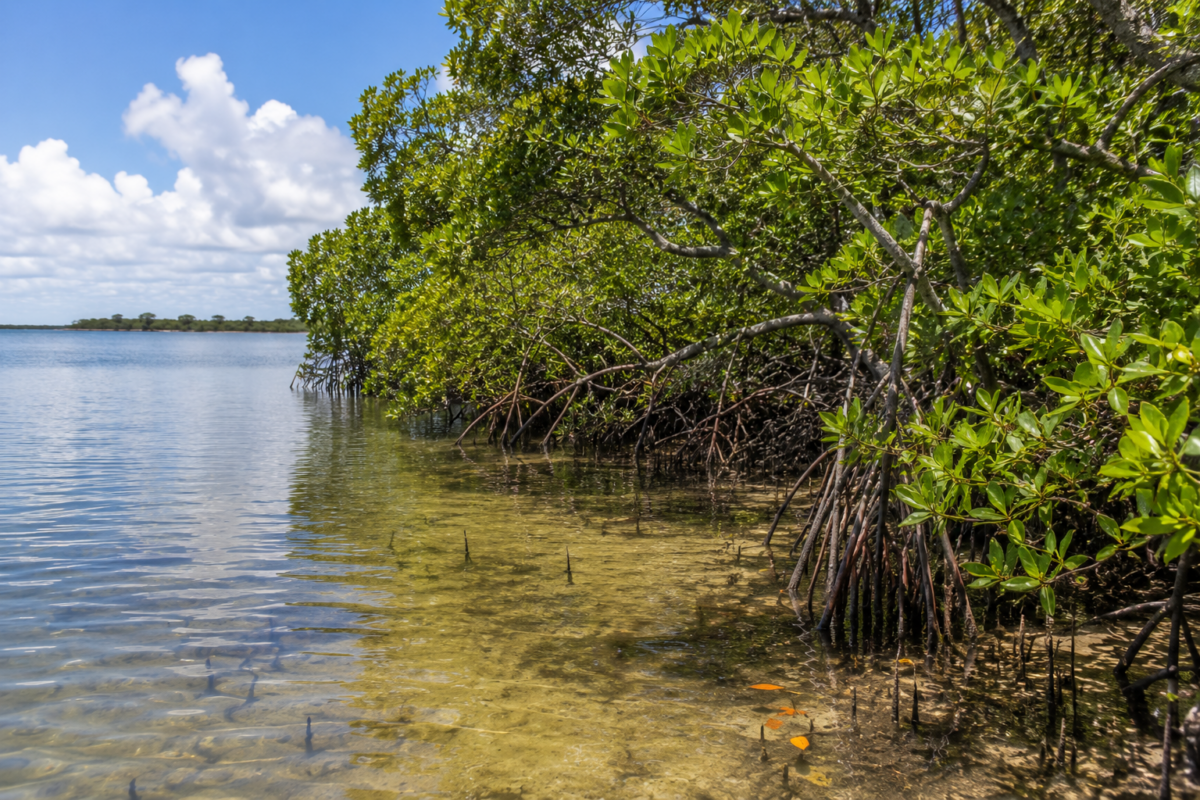
At first glance, mangroves may look like tangled coastal trees growing where land and water meet. Beneath the surface, however, an extraordinary natural system is at work.

Florida mangroves help stabilize shorelines, provide habitat for wildlife, support young fish, filter water, and reduce some of the impacts associated with waves and storm surge.

For visitors exploring Florida’s Gulf Coast, understanding these trees adds another dimension to the landscape.

What Exactly Is a Mangrove?

Mangrove doesn’t refer to a single species.

Florida has three native species: red mangrove, black mangrove, and white mangrove.

Each has its own characteristics and tends to occupy somewhat different portions of the coastal environment.

Red mangroves are perhaps the easiest for visitors to recognize because of their distinctive prop roots. Black mangroves can excrete salt through their leaves, while white mangroves generally occur farther inland within the intertidal environment.

Together, these trees form remarkably valuable coastal habitats.

Florida Mangroves Help Stabilize Shorelines

One of the most important functions of Florida mangroves happens around their roots.

Mangrove root systems slow the movement of water and help trap sediment. This can reduce erosion and stabilize shorelines.

The Florida Department of Environmental Protection explains that mangrove forests help reduce erosion caused by waves, tides, currents, and storm surge.

UF/IFAS similarly notes that the dense root systems can slow water movement during storm surge and dissipate wave energy.

In a coastal state regularly exposed to powerful storms, that natural protection matters.

They Provide Habitat for Young Fish

Look underneath the water around mangrove roots and another important function becomes clear.

The complex network creates shelter for aquatic life.

Florida DEP notes that mangroves provide nursery habitat for many fish and shellfish species. UF/IFAS also explains that mangrove roots provide shelter for many recreationally and commercially important fish species in Florida.

Young fish can use the tangled habitat for protection while they develop.

That means the trees lining a shoreline can influence ecosystems extending well beyond the visible mangrove forest.

Mangroves Support Birds and Other Wildlife

The benefits aren’t limited to animals underwater.

Mangroves provide shelter, nesting areas, and habitat for numerous wildlife species. Florida DEP identifies coastal birds including great egrets, little blue herons, and brown pelicans among species that can use mangrove environments.

For visitors interested in birdwatching or wildlife photography, mangrove areas are therefore worth observing carefully.

As always, wildlife should be viewed from an appropriate distance, particularly around nesting birds.

They Help Maintain Water Quality

Mangroves also work as natural filters.

Florida DEP explains that mangrove forests can remove nutrients and pollutants from stormwater runoff before those substances reach habitats such as seagrass beds and coral reefs.

UF/IFAS describes mangroves as important filters that help maintain water clarity for nearby marine ecosystems.

It is a good reminder that coastal ecosystems are connected. What happens along the shoreline can influence environments farther offshore.

Mangroves Can Reduce Coastal Flooding and Storm Impacts

Mangroves cannot stop hurricanes or eliminate coastal flooding, but research shows that they can help reduce some impacts.

Their roots and vegetation slow moving water, while mangrove environments can absorb and hold water.

UF/IFAS reports research estimating that mangroves prevented about $1.5 billion in storm damage during Hurricane Irma and protected more than 626,000 people across Florida.

This is one reason mangrove conservation has significance beyond wildlife protection.

Healthy coastal ecosystems can also provide practical benefits to nearby communities.

Mangroves Are Moving Farther North

Mangroves are tropical plants, which historically limited their range because they are vulnerable to freezing temperatures.

However, their distribution is changing.

UF/IFAS researchers have documented mangroves becoming more common farther north along Florida’s shorelines as temperatures warm, including portions of the Gulf Coast.

Another UF/IFAS resource notes that mangroves occur as far north as Cedar Key on Florida’s west coast.

For Nature Coast visitors, that makes mangroves an especially interesting part of Florida’s changing coastal environment.

Florida Mangroves Are Protected

Visitors and property owners should remember that Florida mangroves are protected.

Florida regulates mangrove trimming, and property owners may need to follow specific requirements depending on the work being performed. UF/IFAS recommends contacting the Florida Department of Environmental Protection for guidance before undertaking trimming or management.

For visitors, the best approach is much simpler: observe mangroves without disturbing them.

Look Beyond the Trees on Your Next Nature Coast Trip

One of the pleasures of exploring Florida’s Nature Coast is discovering how much is happening within landscapes that initially appear quiet.

Mangroves demonstrate this perfectly.

Their roots help stabilize shorelines. Their branches provide wildlife habitat. Their underwater structures shelter fish. They filter runoff and can help lessen some coastal storm impacts.

So, the next time you encounter Florida mangroves while exploring the Gulf Coast, look beyond their unusual roots and dense branches. You’re looking at an ecosystem performing several important jobs at once.

For travelers using Inglis as a base for exploring the region, Village Pines’ guide to the history of Inglis and its outdoor recreation also provides useful background on the waterways and natural environment that helped shape the area.

The Best Native Plants You’ll Discover While Exploring Florida’s Nature Coast

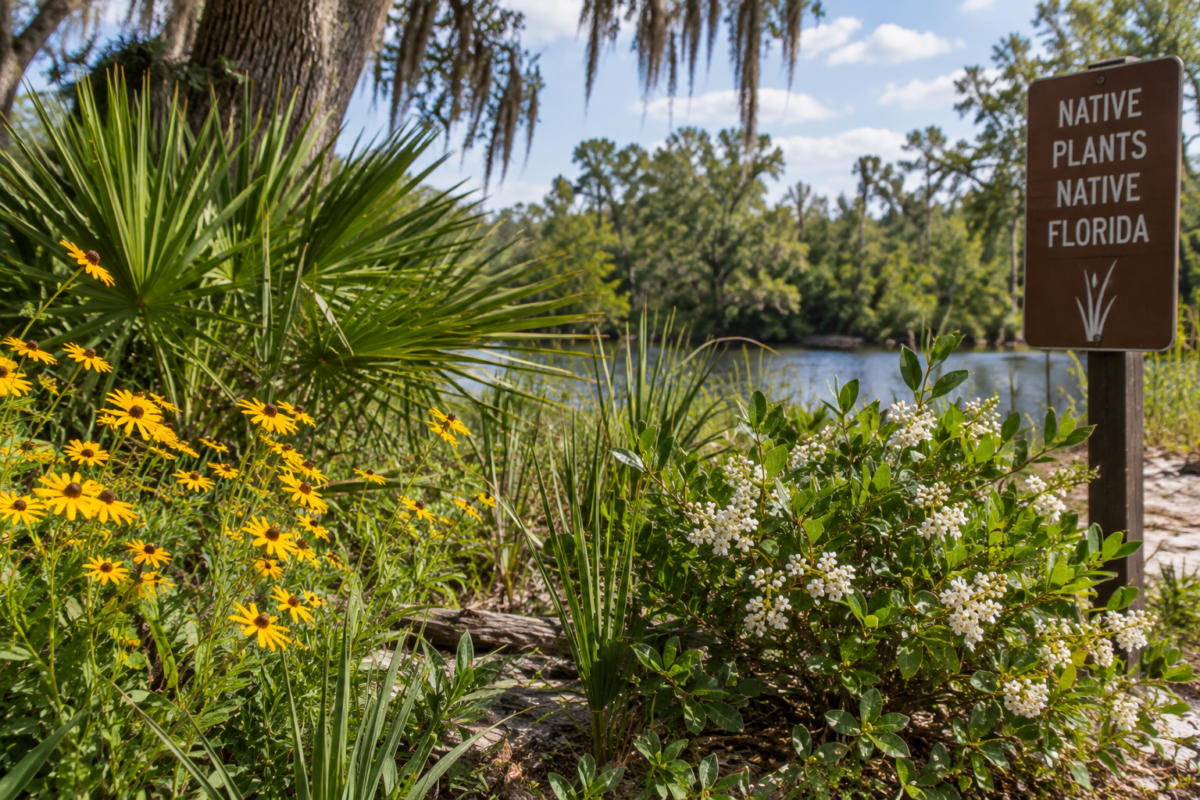
Florida’s Nature Coast isn’t defined by one landscape. Rivers, wetlands, forests, coastal areas, hammocks, and other habitats come together across this part of the state, creating conditions for an impressive variety of plant life.

For visitors, learning to recognize a few Florida native plants can make a hike, wildlife outing, or drive through the Nature Coast more interesting.

Instead of seeing a wall of greenery, you begin noticing how different plants fit into the landscape around you.

What Makes a Plant Native to Florida?

UF/IFAS defines plants as native to Florida if they were present here at the time of European contact in the early 16th century. Florida has more than 2,400 native plant species.

These plants have adapted over long periods to the state’s soils, rainfall, temperatures, and ecosystems.

However, that doesn’t mean every Florida native grows everywhere in the state. Different species are associated with different habitats, including flatwoods, hammocks, swamps, scrub, and coastal areas.

That’s part of what makes exploring the Nature Coast interesting.

Cabbage Palm

Few plants look more unmistakably Floridian than the cabbage palm, also known as the sabal palm.

It is Florida’s state tree and can be encountered across a wide variety of landscapes.

Its tall trunk and fan-shaped leaves make it relatively easy for visitors to recognize. Cabbage palms also contribute habitat and food resources for wildlife.

Because they occur in different environments, you may notice them while exploring wooded areas, roadsides, or places closer to the coast.

Live Oak

Another tree strongly associated with Florida landscapes is the live oak.

Mature live oaks can develop broad, spreading branches that create impressive natural canopies. In humid environments, those branches may also support mosses, lichens, ferns, and other plants.

For visitors interested in nature photography, mature oaks can make particularly striking subjects, especially early or late in the day when sunlight filters through their branches.

Saw Palmetto

Closer to the ground, saw palmetto is another plant you may encounter in Florida’s natural areas.

Its fan-like leaves often form dense growth beneath taller trees, particularly in flatwoods and other suitable habitats.

Saw palmetto is an excellent example of why looking beyond the largest trees can make a nature walk more interesting. Florida’s landscapes are layered, and lower-growing vegetation can be just as characteristic as the canopy above.

Wax Myrtle

Wax myrtle is another native plant found in Florida.

This evergreen shrub or small tree can grow in a variety of environments and plays a role in natural plant communities.

UF/IFAS also identifies native shrubs such as wax myrtle among coastal plants that can help stabilize soils and function as windbreaks.

For wildlife watchers, native shrubs are worth paying attention to because vegetation can provide food, shelter, and nesting opportunities for birds and other animals.

Native Mangroves

As you move toward suitable coastal and tidal environments, the plant communities begin to change.

Florida has three native mangrove species: red mangrove, black mangrove, and white mangrove.

Mangroves are especially interesting because they have adaptations that allow them to survive environments that many other trees cannot tolerate.

Black mangroves, for example, can excrete excess salt through glands on their leaves. Red mangroves are recognizable for their distinctive prop roots.

These plants aren’t simply interesting to identify. They perform important ecological functions along Florida’s coast.

Why Native Plants Matter to Wildlife

Learning about Florida native plants also helps visitors understand wildlife.

Plants form the foundation of habitats. They provide shelter, nesting locations, shade, seeds, fruits, nectar, and other resources used by animals.

That means birdwatching and plant identification often go together.

When you begin recognizing different vegetation, you can also start noticing which birds and animals tend to appear around particular habitats.

Turn a Nature Walk Into a Plant-Spotting Adventure

You don’t need to be a botanist to enjoy identifying plants.

Start with several easily recognizable species and gradually expand what you know.

Taking photographs can help, but avoid removing flowers, leaves, or plants from protected natural areas. Stay on designated trails where required and leave vegetation where you find it.

Official resources from UF/IFAS can also help you learn more about Florida’s native species.

Explore the Nature Coast at a Slower Pace

The Nature Coast rewards people who pay attention.

A river trip might initially be about fishing. A trail walk may start as exercise. But once you begin recognizing Florida native plants, you start seeing the landscape differently.

That makes plant identification an easy addition to an RV trip based around nature and outdoor recreation.

While staying in Inglis, you can also learn more about how the surrounding rivers and landscapes influenced the community through Village Pines’ article on the history of Inglis, Florida.

The more you understand about the plants around you, the more there is to discover every time you head outside.

Exploring the Withlacoochee River: A Nature Lover’s Guide

Florida’s Nature Coast is filled with places where rivers, forests, wetlands, and wildlife come together, and the Withlacoochee River is one of the area’s defining natural features. For travelers staying near Inglis, exploring the river provides an opportunity to experience a quieter and more natural side of Florida.

There are plenty of Withlacoochee River activities to choose from, whether you prefer fishing from the shoreline, launching a kayak, looking for wildlife, or simply enjoying a walk near the water.

If you’re planning an RV trip to Inglis, here are some ways to make the Withlacoochee River part of your stay.

1. Go Fishing Along the Withlacoochee

Fishing is one of the most popular Withlacoochee River activities, and the area around Inglis provides opportunities to encounter both freshwater and saltwater species.

The Inglis Bypass Recreation Area connects with the Lower Withlacoochee River, which continues downstream through Inglis and Yankeetown toward the Gulf. Florida State Parks notes that fishing for both fresh and saltwater species is popular around the bypass.

At the Inglis Dam & Island Recreation Area, anglers can fish around Lake Rousseau on the upstream side or explore the waters downstream of the dam.

Before fishing, remember to check current Florida fishing regulations and licensing requirements.

2. Explore the Water by Kayak or Canoe

Paddling gives you an entirely different perspective of the river.

Instead of observing the landscape from shore, you can move through the water at your own pace while keeping an eye out for birds and other wildlife.

The Inglis Dam & Island Recreation Area includes a boat ramp that also serves as a canoe and kayak launch. It provides access to a section of the Withlacoochee below the main dam and spillway.

Conditions on rivers can change, so paddlers should always check weather, water conditions, and local guidance before setting out.

3. Bring Your Binoculars for Birdwatching

Not every river adventure needs to take place on the water.

Birdwatching is another accessible activity around the Withlacoochee. The combination of water, trees, wetlands, and open spaces creates opportunities to observe a variety of birds.

At the Inglis Bypass Recreation Area, visitors may spot wading birds, raptors, and black vultures.

Early morning can be an especially enjoyable time to explore. The temperatures may be more comfortable, recreational areas can be quieter, and you can take your time observing the landscape.

4. Watch for Florida Wildlife

Wildlife viewing is one reason Nature Coast visitors return to outdoor areas again and again.

You never know exactly what you’ll encounter.

Florida State Parks notes that manatees are occasionally seen downstream of Inglis Dam during warmer months. While wildlife sightings are never guaranteed, keeping a respectful distance and allowing animals to behave naturally makes the experience better for everyone.

A camera or pair of binoculars can be useful even if wildlife photography isn’t the main purpose of your trip.

5. Explore Nearby Trails

Some of the best Withlacoochee River activities happen alongside the water rather than on it.

The Inglis area offers opportunities for walking, hiking, and biking. The Bypass Recreation Area has grass paths along the bypass canal, while the Inglis Lock Recreation Area provides access to hiking and biking opportunities associated with the Cross Florida Greenway.

A trail walk can be a good alternative when you want to explore but don’t want to spend an entire day fishing or paddling.

6. Slow Down and Enjoy the Scenery

It’s easy to think that an outdoor vacation needs to be filled with activities. Sometimes the best part is simply having enough time to stop.

A picnic beside the water, a quiet morning watching birds, or an afternoon photographing the landscape can be just as memorable as a full itinerary.

The river has also played an important role in the area’s past. Village Pines’ article about the history of Inglis, Florida explains how the community’s location near the Withlacoochee helped shape its development.

Understanding that history can add another layer to what you see while exploring the area today.

Make the Withlacoochee Part of Your RV Trip

One advantage of RV camping near Inglis is that you don’t have to experience the Nature Coast in a single day.

You can fish one morning, explore a trail the next afternoon, and return to the water later in your trip.

When you’re staying nearby at Village Pines, these Withlacoochee River activities can become part of a relaxed outdoor vacation rather than something you have to squeeze into a busy itinerary.

The Rise of Nature-Based Travel in 2026 and Why Florida’s Nature Coast Is Leading the Trend

For many travelers, the ideal vacation in 2026 looks less like a crowded attraction and more like a quiet river, hiking trail, wildlife encounter, or evening spent outdoors.

Nature-based travel has become an increasingly important part of how people choose destinations. Rather than filling every day with scheduled attractions, travelers are looking for places where the landscape itself becomes part of the experience.

Research backs up the trend. KAYAK’s 2026 travel report found that 63% of U.S. travelers surveyed said natural wonders would guide their travel plans, while nature trips ranked among the top three vacation choices for Gen Z.

For RV travelers interested in this slower, more outdoor-focused style of vacation, Florida’s Nature Coast is particularly well suited.

What Is Nature-Based Travel?

Nature-based travel refers to trips centered partly or primarily around natural environments.

It can include adventurous activities, but it doesn’t have to mean strenuous outdoor recreation. A nature-focused vacation might involve:

  • Hiking through a natural area
  • Paddling a river
  • Fishing
  • Birdwatching and wildlife viewing
  • Nature photography
  • Exploring springs and wetlands
  • Watching the sunset from your campsite

The emphasis is on experiencing the destination’s natural surroundings rather than moving between heavily developed attractions.

That flexibility makes nature travel suitable for families, couples, retirees, solo RV travelers, and people simply looking for a quieter vacation.

Why Nature-Based Travel Is Growing in 2026

One reason for the growth is that travelers increasingly want experiences that feel memorable and connected to a particular destination.

KAYAK’s research also points to the growth of “soft adventures,” where travelers combine activities such as hiking, cycling, or paddleboarding with comfortable accommodation and time to relax.

Another 2026 travel forecast found that 40% of surveyed travelers wanted to visit national parks and wilderness areas during the year, with interest rising to 44% among Gen Z respondents.

This is an important shift. Outdoor travel doesn’t necessarily mean choosing between comfort and adventure anymore. Travelers increasingly want both.

Florida’s Nature Coast Fits the Trend Naturally

Florida’s Nature Coast offers a very different experience from the theme parks, resorts, and densely developed destinations for which the state is often known.

Around Inglis, travelers can explore rivers, woodlands, wetlands, coastal environments, and wildlife habitats.

The area’s history has also been shaped by those natural resources. As explained in Village Pines’ guide to the history of Inglis, Florida, the Withlacoochee River influenced transportation and local development long before outdoor tourism became part of the community’s identity.

Today, many of those same landscapes attract visitors for completely different reasons.

Rivers Create Opportunities for Outdoor Adventure

The Withlacoochee River is one of the area’s most recognizable natural features.

Nearby public recreation areas provide opportunities for fishing, paddling, hiking, birding, and wildlife viewing. The Florida State Parks guide to Inglis Dam & Island Recreation Area, for example, lists boating, fishing, hiking, birding, and wildlife viewing among the available experiences.

The nearby Inglis Bypass Recreation Area also offers fishing, birding, walking, biking, and picnic facilities.

These aren’t attractions that require an entire day to be planned around them. Visitors can choose their own pace.

Wildlife Makes Every Visit Different

Wildlife is another reason nature-based travel appeals to repeat visitors.

Unlike a scheduled attraction, nature never provides exactly the same experience twice. One morning may bring an interesting bird sighting, while another day could produce an unexpected encounter along the water.

Even slowing down enough to listen to birds around your campsite can become part of the trip.

Village Pines itself promotes wildlife viewing as one of the outdoor experiences available to guests, complementing the wider recreational opportunities found around Inglis.

RV Travel and Nature-Based Vacations Work Well Together

RV camping makes it possible to stay close to outdoor destinations while retaining many everyday comforts.

Instead of visiting a natural area for a few hours before returning to a busy city, travelers can make the outdoor environment part of their entire stay.

At Village Pines, guests can combine that experience with practical campground amenities including WiFi, a bath house, laundry facilities, RV hookups, a clubhouse, and a dump station.

That balance reflects another major element of the 2026 travel trend: people want access to nature without necessarily giving up convenience.

Experience Another Side of Florida

Florida will always be famous for beaches and theme parks, but those aren’t the state’s only vacation experiences.

The Nature Coast offers rivers, forests, wildlife, fishing, paddling, trails, and smaller communities where visitors can experience Florida at a different pace.

For travelers embracing nature-based travel in 2026, that combination is increasingly appealing.

A stay in Inglis provides a convenient opportunity to explore the landscapes that have shaped this part of Florida for generations. Whether your ideal day involves fishing on the river, looking for wildlife, exploring a trail, or simply relaxing beneath the trees at your RV site, the Nature Coast makes it easy to build a vacation around the outdoors.

How Full Hookup RV Sites Make Camping More Comfortable

Today’s RV travelers are looking for more than just overnight parking. Campsites have amenities that bring the benefits of nature to the modern individual. These full hookup RV sites will provide a dependable power, water and sewage connection, making extended trips more convenient and enjoyable. 

A campground with full hookups allows you to enjoy the outdoors more and worry less about essential utilities. Whether you’re spending a weekend or an extended vacation on Florida’s Nature Coast. These accommodations offer a convenient base for exploring one of Florida’s most picturesque coastal areas. Guests staying at Village Pine near Inglis can enjoy this convenient location.

What Are Full Hookup RV Sites?

Full hookup RV sites offer three things that most modern RV travelers desire, such as electrical service and fresh water. They also provide a direct sewer connection.

These services enable RV owners to enjoy many of the same conveniences they have at home from a campground.

First, electrical connections provide electricity to air conditioners, lights, appliances, and electronics.
Next, fresh water connections mean fresh water is available for showers, sinks, and cooking.
Finally, sewer hookups mean wastewater tanks can be emptied directly without frequent trips to a dump station.

For some people, full hookups are more relaxing when traveling by RV, and for longer vacations.

More Comfort During Every Stay

While modern RV’s have many amenities that provide comfort for camping in all seasons, these systems work best if backed up by reliable campground services. Guests who opt for full hookups can enjoy indoor features, cook, charge devices, and control the temperature without frequently checking on the tank water and battery levels.

This is a handier feature after a day of fishing, hiking, kayaking or exploring spree around Inglis and Florida’s Nature Coast.

Ideal for Extended Visits

Numerous visitors extend their stay for a few days or weeks to explore Levy County and the surrounding areas. Consequently, continuous water, electricity, and sewer services make it much easier to stay for long periods, as routine maintenance is much less of a burden.

Travelers will enjoy doing things in the area without worrying about stopping too often to refill water tanks and/or empty holding tanks.

Supporting Every Type of RV Traveler

Campgrounds welcome many visitors, from weekend adventurers to retirees traveling for several months. They enjoy cooking, running appliances, and controlling the indoor temperature. Remote workers also benefit from electrical hookups to power computers and other devices throughout the day.

After long hours of traveling, you’ll appreciate reliable utilities on Florida’s Gulf Coast. Spend your days visiting nearby parks, waterfront communities, and enjoying scenic drives. RV parks with full hookups offer flexibility for many types of travelers.

Convenience in Every Season

RVs are welcome in Florida all year round. In warmer months, reliable electricity enables air conditioning systems to keep people cool, and in colder winter months, people come to the area to experience the mild climate. Modern hookups guarantee year-round easy access to key services, making camping a pleasant and comfortable experience, irrespective of season.

Explore Florida’s Nature Coast with Confidence

Full hook-ups at a campground enable guests to experience nearby attractions without having to leave early to control campground utilities. As a result, visitors can enjoy a day of nature walks at the Withlacoochee Gulf Preserve, a boat ride on the Withlacoochee River, a tour of Yankeetown, or another scenic trip along Florida’s Nature Coast.

After a day of outdoor fun, guests return to a fully connected campsite. As a result, they enjoy a hot shower, a full kitchen, and a steady electricity supply to unwind in the evening.

The mix of adventure and comfort has led to a growing trend of RV camping in Florida among travelers.

Choosing the Right Campground

There are a number of factors to take into account when choosing an RV campground other than the location. Camp amenities such as utilities, access to the property, cleanliness and nearby attractions make a better experience of camping. Reliable infrastructure and easy access to outdoor recreation will increase the value of a campground for short and long term stays.

Enjoy Comfortable Camping at Village Pine

Village Pine is conveniently located to numerous popular activities in the Nature Coast area and has the amenities that today’s RV traveler expects. Guests can enjoy the beauty of Inglis and the surrounding preserves, nearby rivers, and the waters of the Gulf, without sacrificing everyday comfort by staying at full hookup RV sites.

From fishing trips to relaxation breaks and exploring Florida’s Nature Coast, reliable campground utilities enhance every stay. Village Pine offers comfortable lodging, nearby outdoor recreation, and full hookup RV camping. Guests can also enjoy the serene beauty of one of Florida’s most enjoyable RV destinations.

Pet-Friendly Activities Inglis FL: Top Places to Explore

Taking your dog RVing makes every vacation a little sweeter, especially if your destination has lots of open land to explore. Looking for pet friendly activities Inglis FL? Florida’s Nature Coast is a terrific area to spend time outdoors with your four-legged buddy. Inglis offers visitors and their pets enjoyable trips through tranquil natural surroundings, scenic walking paths, and riverfront vistas. Guests vacationing at Village Pine can conveniently visit several outdoor destinations. They can also enjoy the slower pace that makes this section of Florida so appealing.

Why the Nature Coast Is Great for Dog Owners

The Nature Coast is not a congested tourist location, but a region with broad open spaces where people can appreciate nature at a leisurely pace. In addition, the quiet streets, local parks, and conserved natural areas allow visitors to take leisurely walks without the noise and bustle of a larger city.

Many RV travelers come to this region so they can spend more time outdoors with their pets, rather than searching for dog-friendly places. Dog-friendly RV camping is a fun experience for much of the year thanks to the combination of natural beauty and small-town charm. 

Some parks may have their own leash and access rules.

Pet-Friendly Activities Inglis FL: Scenic Walking Trails

One of the easiest ways to explore the neighbourhood with your dog is to visit local walking paths.

Visit the Withlacoochee Gulf Preserve

One of the more popular recreational spots in the area is the Withlacoochee Gulf Preserve. Its boardwalks and walking trails wind through coastal marshes, offering visitors tranquil vistas of native landscapes and seasonal birds.

Always verify the current pet rules before going to any public place. This allows pet owners to enjoy nature while respecting the preserve’s wildlife and conservation efforts. Protect the natural environment for everyone by bringing water and keeping your dog on designated trails.

Discover the Cross Florida Greenway

Other great outdoor walking options are the nearby sections of the Marjorie Harris Carr Cross Florida Greenway. The greenway has trails through forests and open spaces, providing dogs with lots of fresh sights and smells to explore on daily outings. 

The trails are particularly nice during the cooler hours of the morning and evening.

Spend Time Along the Water

The Withlacoochee River is one of Inglis’ defining natural features and various public access points offer tranquil spots to take in the landscape with your pet.

Visitors love these spots. They offer a peaceful atmosphere whether you are lounging beside a boat ramp, watching boats go by, or enjoying a short stroll by the river.

If you are planning on going RV camping on Florida’s Nature Coast, bringing your dog along for these calm trips adds another level of fun to your trip.

Explore Nearby Yankeetown

Yankeetown is just a few minutes from Inglis and provides another chance to appreciate Florida’s waterfront beauty. The town’s waterfront location and peaceful streets are excellent for a leisurely walk with your dog. 

Once you’ve finished exploring all the area has to offer, swing by one of the local restaurants or shops on your way back to your campground for a peaceful evening. 

Pack Smart for a Day Outdoors

Being prepared for your outing helps both you and your dog comfortable.

Please bring these essentials before you go: 

  • Drinking water
  • A collapsible water bowl
  • Trash bags
  • A durable leash
  • Puppy treats during breaks
  • A towel for muddy feet 

Florida weather can become very hot, especially during the summer. Take your dog for walks early in the morning or late in the day to keep them from overheating. 

Tips for Responsible Pet Travel

Enjoying pet-friendly activities Inglis FL also means helping to protect the natural treasures of the area.

Let’s follow these simple rules:

  • Always use a leash on your dog when required. 
  • Pick up after your pet.
  • Give wildlife plenty of space. 
  • Stay on marked trails. · 
  • Observe the park rules that are posted.

These practices help keep the natural beauty of the Nature Coast and provide for a great experience for everyone.

Stay Close to Pet Friendly Activities at Village Pine

Village Pine is a great hub for RV travelers and their pets to explore the outdoor attractions in the area. Scenic trails, riverfront parks and the surrounding village of Yankeetown, many of the Nature Coast’s treasures are only a short drive away.

Whether you’re taking morning walks, relaxing afternoons by the river or visiting local parks, Village Pine is a great place to start exploring the best pet-friendly activities Inglis FL has to offer. With inviting surroundings, magnificent natural scenery and plenty of opportunities to enjoy the outdoors together, it’s easy to see why more RV travelers select this tranquil area of Florida for their next vacation with their canine companions. 

The History of Inglis Florida: From River Community to Outdoor Recreation Hub

Florida is full of communities with unique stories, and Inglis is one of them. Inglis, Florida’s history is closely tied to the area’s rivers, woodlands, and Gulf Coast. Tourism was changing larger cities at a quick pace, but Inglis remained a tiny village where the outdoors and natural beauty continued to shape daily life. 

Today, people visit the town for boating, fishing, hiking, and RV camping on Florida’s Nature Coast, but its story began long before tourism. Guests visiting Village Pine will be able to enjoy the history and the outdoor attractions that make this portion of Levy County special.

Early Life Along the Withlacoochee River

Long before any modern highways were built in the area, the Withlacoochee River was an important part of life for the people who lived here. The river offered transportation, access to natural resources, and links to the Gulf waters.

European-American settlement expanded during the nineteenth century and the surrounding area supported activities such as forestry, agriculture, and fishing. The river made travel and trading simpler. Small communities sprang up slowly along the river .

Inglis evolved as a quiet rural community, not a huge business centre. That slower pace of growth meant much of the area’s natural scenery was preserved, something visitors still enjoy today. 

A Community Shaped by Nature

The environment has always been a part of Inglis’ life. Rivers, woodlands, wetlands, and adjacent coastal waters remain vital to outdoor recreation that draws locals and visitors year-round.

This strong interaction with nature remains one of the town’s defining qualities.

A New Chapter in the History of Inglis Florida

One of the major events in the history of Inglis, Florida, was the development of the Cross Florida Barge Canal project throughout the twentieth century.

The canal was never completed statewide, but some structures built near Inglis became permanent landmarks. Today, the Inglis Lock and Inglis Dam remain significant features of the area, and the dam formed Lake Rousseau. There are popular sites for freshwater fishing and boating.

Today, people use much of the existing infrastructure for recreation and public access to outdoor areas instead of commercial shipping.

Lasting Benefits for Visitors

Today, travellers have many recreation opportunities associated with these developments, including:

  • Boating on the Withlacoochee River
  • Fishing for freshwater on Lake Rousseau.
  • Walking and bicycling on parts of the Marjorie Harris Carr Cross Florida Greenway
  • Wildlife watching in nearby natural areas. 

These attractions have been key to showing many visitors a quieter side of Florida’s Gulf Coast.

From a Working Community to an Outdoor Destination

Inglis gradually shifted from traditional industries toward outdoor recreation and tourism. It’s also near rivers, marshes, and Gulf waters, so it’s a great place to visit for those who like to be outside.

Nearby, the Withlacoochee Gulf Preserve has walking trails, boardwalks, and observation towers overlooking coastal marshes. People come to observe wildlife, photograph natural scenery, and enjoy the quiet surroundings that are so much a part of the Nature Coast. 

Fishing is still one of the area’s most popular activities. Florida fishing adventures and Nature Coast RV camping are top options for many travelers thanks to public boat ramps that offer easy access to freshwater and coastal waterways. 

Inglis Florida: A Town That Has Kept Its Identity

Unlike many Florida villages that have quickly urbanized, Inglis has preserved its small-town feel. Local parks, small businesses, and outdoor leisure continue to be vital to community life.

Nearby Yankeetown adds to the area’s attractiveness, providing another insight into Florida’s coastal legacy. These neighboring communities offer visitors an authentic experience that has become increasingly difficult to find in the more developed states.

That blend of history and nature still attracts travelers in search of a different kind of Florida vacation.

Discover Inglis While Staying at Village Pine

Village Pine is a great site for those wanting to see the history of Inglis, Florida, as well as the area’s outdoor activities. There are local parks to enjoy; you may launch a boat on the river, hike the local trails, or take a quiet drive around Levy County.

Knowing the history of Inglis Florida adds another dimension to each visit. From its early ties to the Withlacoochee River to its present-day status as an outdoor recreation destination, the town captures the timeless allure of Florida’s Nature Coast. Whether you’re a local history buff or just seeking a calm RV break, Inglis offers an experience that blends legacy, nature, and hospitality in one unique spot. 

​

Why Florida Nature Coast RV Camping Is Worth Discovering

Florida is known for its theme parks, busy resort towns, and beaches. But not all travelers are interested in theme parks or crowded resorts. For those seeking restful mornings, picturesque waterways, and convenient natural access, Florida Nature Coast RV camping offers a completely different experience. 

The Nature Coast stretches along Florida’s Gulf Coast and offers shoreline access to a remarkable diversity of welcoming communities, including Inglis and Yankeetown, where nature and outdoor recreation are the stars of the show. Village Pine’s guests have a host of options for exploring this quiet area, thanks to the campground’s convenient location. 

A Side of Florida That Hasn’t Lost Its Character

Preserving natural landscapes, rather than replacing them with large-scale development, is one of the hallmarks of the Nature Coast. Rivers, coastal marshes, forests and wildlife habitats remain defining features of the region. 

Inglis is located on the Withlacoochee River, and nearby, there is a system of tidal waterways that lead to the Gulf in the town of Yankeetown. These neighboring communities provide RV travelers with a relaxed lifestyle, perfect for fishing, boating, hiking, and birdwatching.

Many visitors don’t plan each hour; they just slow down and take in their surroundings.

Florida Nature Coast RV camping

This section of Florida is popular with visitors seeking experiences they can’t find at larger tourist attractions. 

Peaceful Campgrounds

The quiet environment is one of the greatest features of this RV campground on the Nature Coast. Campgrounds in the vicinity offer a pleasant place to stay without being caught in the middle of traffic or busy commercial areas.

Easy Access to Outdoor Recreation

Many popular outdoor locations are conveniently within a short driving distance of Village Pine. This enables visitors to explore several nearby attractions while spending less time driving. 

The following are some of the favorite activities:

  • Withlacoochee River fishing
  • Canoeing along calm waterways. 
  • Boating to the Gulf of Mexico.
  • Walking local nature trails.
  • Observing natural wildlife.
  • Cruising Levy County.

This diversification lends the area attractiveness to couples, families, retirees, and single RVers.

Nature Is the Main Attraction

The Nature Coast is not a tourist area built around an entertainment complex; it promotes living with nature.

Visit the Withlacoochee Gulf Preserve

In addition, Withlacoochee Gulf Preserve offers walking trails, boardwalks, and observation towers overlooking coastal wetlands. As a result, it is a popular destination for birdwatching, relaxation, and photography of Florida’s coastal landscapes.

Explore the River

In addition, there are boating, paddling, and freshwater fishing opportunities on the Withlacoochee River. From there, visitors can launch their boats or kayaks from the numerous public boat ramps located in and around Inglis.

The river joins the Gulf of Mexico at some point, and the region around it is home to numerous fish and wildlife species that draw visitors and outdoor recreationists year-round.

Discover the Charm of Small Coastal Communities

It’s these neighboring towns that make this region memorable.

Inglis is laid-back and a perfect starting point for lots of outdoor activities. Meanwhile, a few miles away, Yankeetown is famous for its waterfront life and its association with Florida’s commercial fishing past.

Visitors will discover local businesses, restaurants, marinas, parks, and the surrounding water instead of expansive shopping districts, all of which make the region well known.

Instead, these communities offer visitors a slice of “Old Florida” that stays far removed from the more crowded tourist destinations often associated with Florida.

Why Village Pine Is a Great Place to Stay

Selecting the appropriate RV campground can enhance the enjoyment of an RV trip. Village Pine is located within easy driving distance of numerous outdoor activities in the Nature Coast, as well as day trips around Inglis and Yankeetown.

Additionally, staying close by can mean less driving and more enjoyment of your vacation, whether you are hiking, boating, fishing, or simply staying close to your campsite.

A Hidden Gem Worth Exploring

Although it’s true that many Florida vacations revolve around popular attractions, crowds of tourists on the beach or the hustle and bustle of the city don’t make every vacation memorable. Florida Nature Coast RV camping is unique for its peaceful scenery, abundant wildlife, welcoming communities, and access to outdoor adventures.

The Nature Coast is still one of Florida’s hidden gems for those who value its nature and relaxed vibe. In addition to this staying at Village Pine will give a visitor a wonderful chance to discover and experience this unique area and to learn why it continues to welcome visitors year after year. 

Where outdoor enthusiasts and nature lovers alike can indulge in a perfect blend of relaxation and adventure.