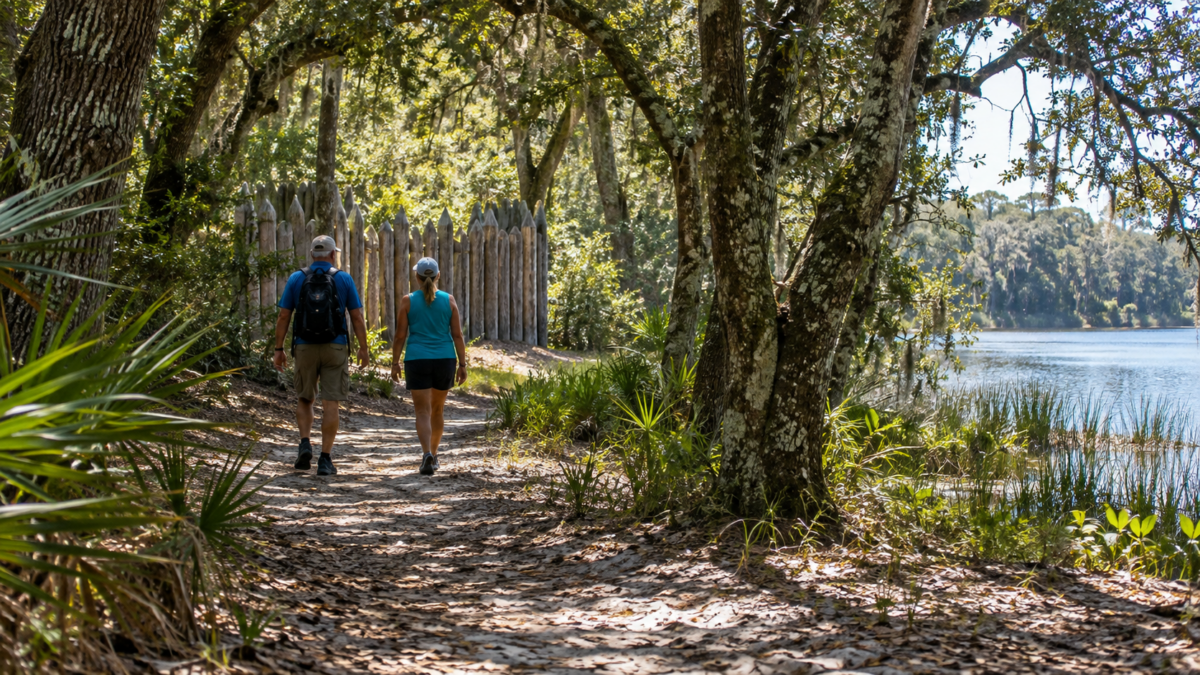
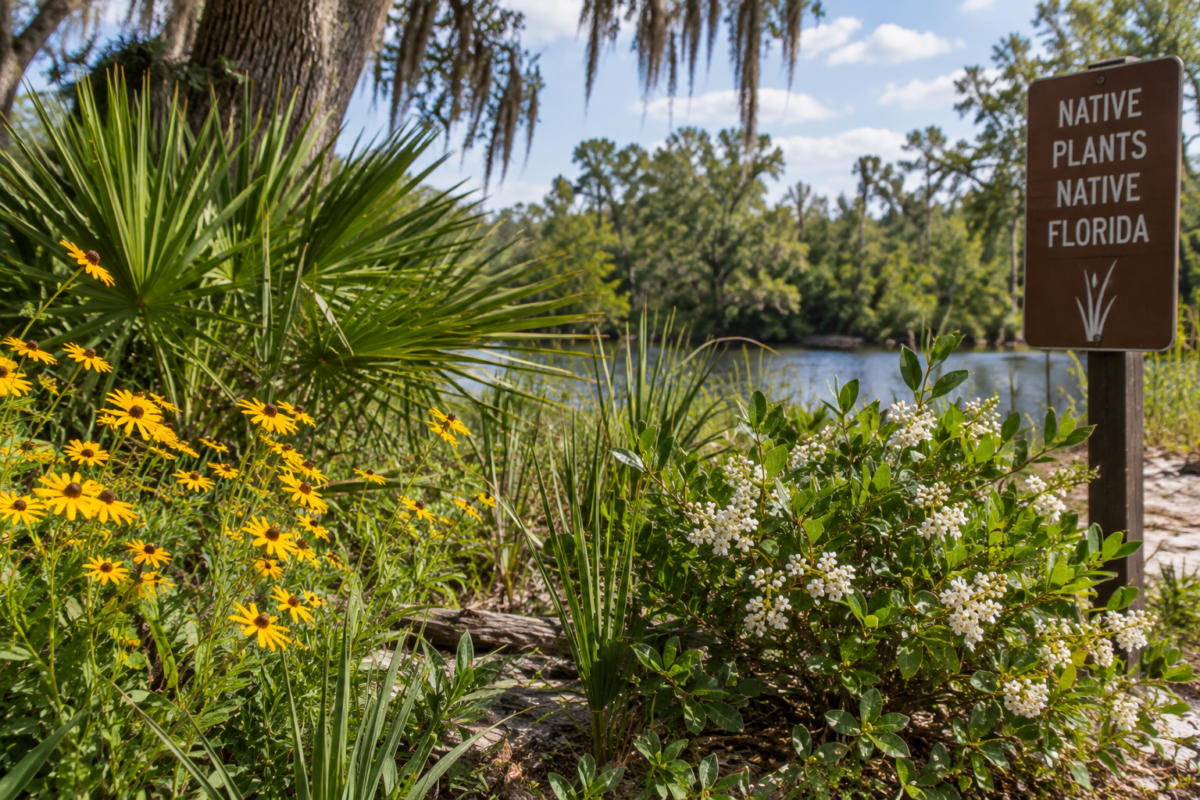
Withlacoochee State Trail for a Planned Recreational Bike Ride

Withlacoochee State Trail offers a cycling outing that you can adapt to your experience and energy. You do not need to ride its entire length to enjoy a section, stop for a break, and discover part of Florida beyond the main roads.

For guests at Village Pines Campground, this is a separately planned trail trip rather than a route beginning at the campground. Choose your trailhead and transport arrangements before deciding how far to ride.

Map Your Withlacoochee State Trail Ride

The official trail guide describes a 47-mile paved route between Citrus Springs and Dade City. It passes through several communities and different natural settings. Florida State Parks

Select a short section for your first outing. Review the current map, access notices, and parking arrangements for the specific trailhead you intend to use.

Do not confuse the State Trail with trails at the Inglis recreation areas or assume all routes mentioning the Withlacoochee connect directly. Names can refer to different places within the wider region.

Set a Distance That Includes the Return

For an out-and-back ride, turn around while everyone still has energy. Wind, heat, stops, and unfamiliar equipment can make the return feel different from the outward journey.

Keep a shorter option available and agree that anyone can request it. A comfortable experience is more likely to encourage another ride than pushing beyond the group’s ability.

Check bicycles before departure, wear helmets, and carry water and a small repair kit suited to your equipment. Avoid carrying loose belongings that interfere with steering.

Notice the Trail’s Railroad Heritage

This recreational route also reflects earlier transportation patterns. The state’s trail history page identifies reminders of railroad activity along the corridor. Florida State Parks

Use this background to make selected stops more interesting. You might notice an old marker or consider why towns developed around transport connections.

Stop out of the travel line before reading, photographing, or discussing a feature. Keep your speed considerate around walkers and other cyclists.

Give Cycling Its Own Place in the Vacation

Plan a meal break and enough time to return to Inglis without rushing. Treat a longer ride as your main activity rather than adding it after a full morning elsewhere.

Our history of Inglis provides a separate look at how transportation and waterways shaped the area. Our full hookup camping article covers practical campground comforts after an active day.

Make Withlacoochee State Trail part of a trip with a comfortable balance of movement and rest. Reserve your stay at Village Pines Campground and plan a cycling outing that fits your group.
Dunnellon Trail for a Short Cycling or Walking Outing

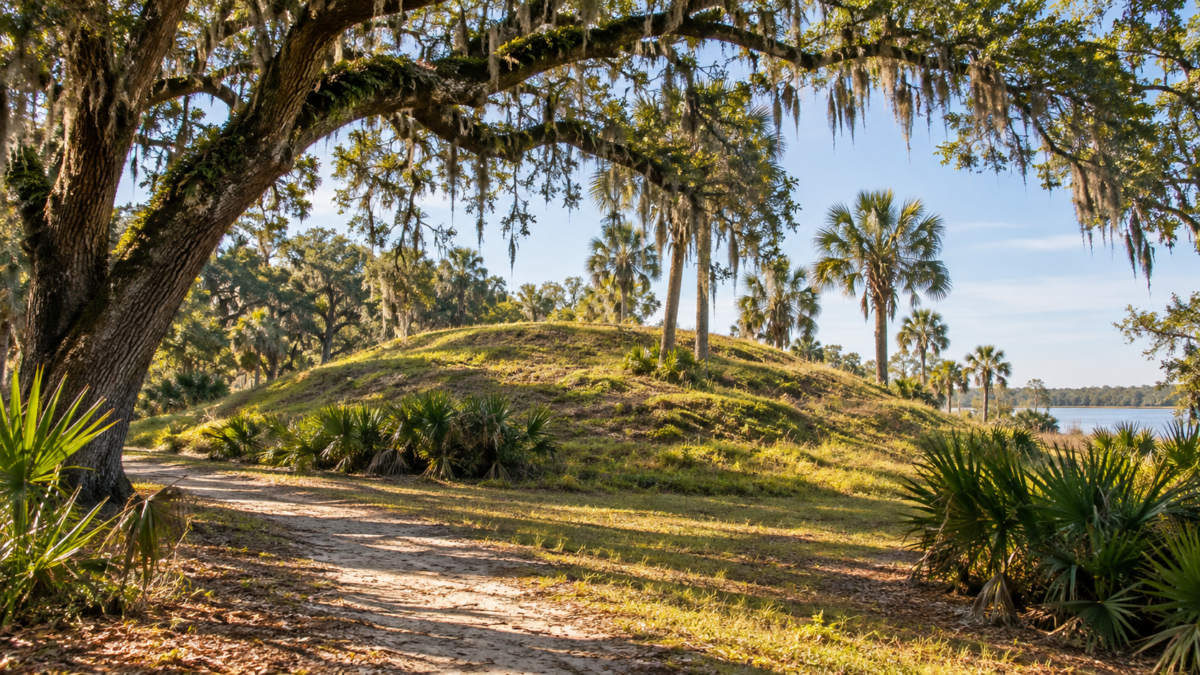
Dunnellon Trail gives travelers an option for an outdoor outing with a clear, manageable focus. You can choose walking or cycling, set your turnaround point, and enjoy the route without committing to a full day on the water.

For guests at Village Pines Campground, it can provide a useful change of pace from fishing or visiting larger attractions. Planning the start and return points beforehand makes the outing easier for mixed-age groups.

Choose Your Dunnellon Trail Starting Point

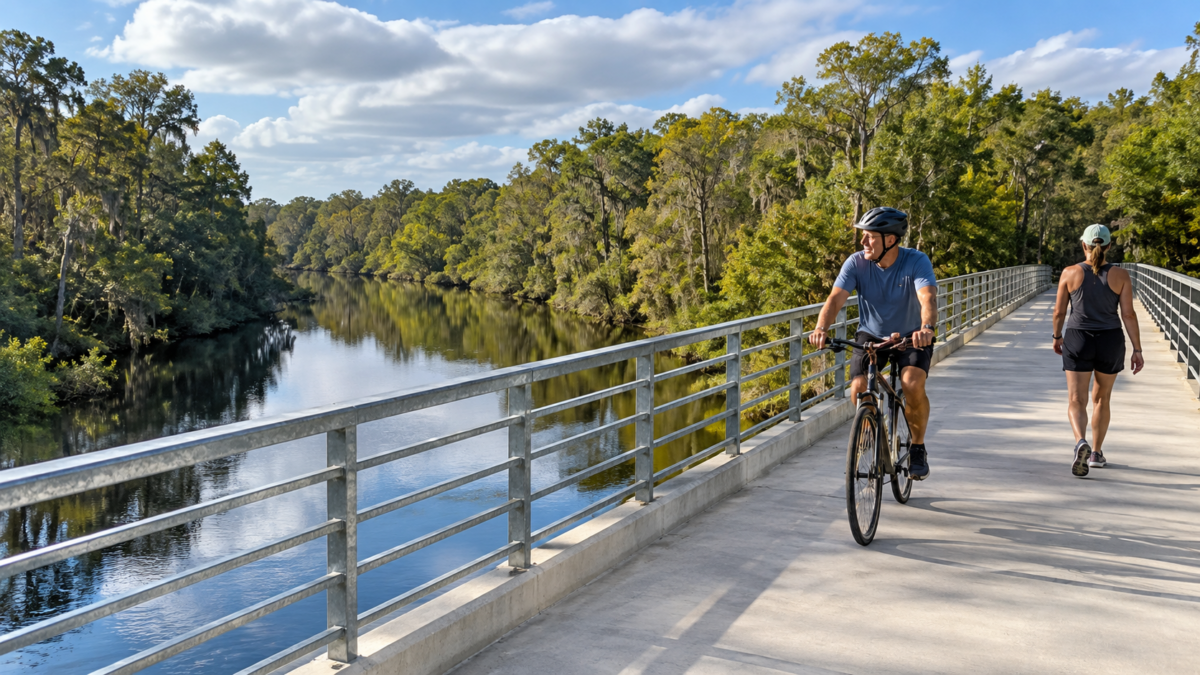
Florida State Parks describes the route as a 2.4-mile paved multi-use trail, largely following a historic railroad bed. Its official trail page identifies trailheads and explains the river bridge connection. Florida State Parks

Select the trailhead that suits your intended route. Check parking, vehicle suitability, and current notices before loading bikes or setting out.

Remember that walking to a destination and returning to the same vehicle doubles the distance traveled. A short section can be the right choice even when the full trail looks manageable on paper.

Decide Between Walking and Cycling

Walking gives you more time to pause and look at the surroundings. Cycling covers ground more quickly but adds equipment preparation and the need to manage speed around other users.

If you bring bicycles, check brakes, tires, and fit before leaving camp. Pack helmets and water, and carry only equipment you can secure comfortably.

For broader context about Florida’s recreation routes, the state parks article on greenways and connectivity explains how different trail systems support outdoor travel.

Pause for the River View Considerately

The bridge over the Withlacoochee River is a notable feature of the route. Enjoy the view from permitted areas while keeping the travel line clear.

Step aside safely before taking photographs. Cyclists should stop and dismount where appropriate rather than trying to frame a picture while moving.

Keep children close at junctions and crossings. Discuss where the group will regroup so a brief photo stop does not become an accidental separation.

Keep the Rest of the Day Simple

Allow time for a snack, a meal, and the drive back. The outing does not need another demanding activity to feel worthwhile.

Our Withlacoochee River activities guide explores a different way to enjoy the region’s waterways. Our history of Inglis article adds background to your wider trip.

Back at camp, check and store your equipment so it is ready for the next outing. Leave the evening open for a relaxed meal and conversation.

Make Dunnellon Trail part of a vacation with room for comfortable outdoor activity. Plan your stay at Village Pines Campground and explore the region at a pace that suits you.


Three Sisters Springs Boardwalk for a Land-Based Crystal River Visit

The Three Sisters Springs boardwalk gives visitors a way to appreciate Crystal River’s spring scenery from land. You can look into the water, observe the surrounding habitat, and enjoy a visit without organizing a paddling or swimming trip.

For travelers staying at Village Pines Campground, the most useful preparation is understanding how entry works. Land access and water access are separate experiences, and choosing the boardwalk means planning specifically for the land-based visit.

Understand Three Sisters Springs Boardwalk Access

Use the city’s Three Sisters Springs information to check tickets, transportation, parking, and current arrangements.

Visitors cannot enter the springs from the refuge’s land, and visitors arriving by water cannot climb onto the refuge. These restrictions help protect the shoreline from erosion. A boardwalk admission is therefore not a swimming admission. Crystal River FL

General visitor parking is also separate from the refuge itself. Read the city’s directions before setting out rather than driving a large vehicle directly to the gate and expecting a space.

Plan Around Wildlife Without Expecting a Guarantee

Manatees move freely through the spring system. Cold winter conditions can improve the chances of seeing them in the springs, but sightings are never guaranteed. Crystal River FL

Visit for the whole setting: water clarity, vegetation, birds, and the relationship between the springs and surrounding wetlands. This makes the outing worthwhile even when your hoped-for animal is absent.

The city’s boardwalk visitor guide explains viewing areas, nature trails, and visitor rules. Check the latest information about tours and access before promising a particular experience.

Keep the Visit Comfortable and Considerate

Bring water, weather-appropriate clothing, and a camera or binoculars if you enjoy observation. Keep belongings secure near railings and avoid blocking other visitors while taking pictures.

Allow time to pause at viewpoints. Quiet observation often reveals more than moving continuously from one photo spot to the next.

Check access arrangements for anyone with mobility needs. Also review pet rules before departure; this refuge visit requires a different plan from an ordinary walk with your dog.

Leave Space for the Rest of Your Vacation

Our Withlacoochee River guide can help you arrange another day beside the water. For background on your campground’s home community, read our history of Inglis.

After the boardwalk, choose a meal or a short town stop based on everyone’s energy. You do not need to add an in-water excursion to complete the day.

Make the Three Sisters Springs boardwalk part of a relaxed Nature Coast getaway. Book your stay at Village Pines Campground and leave time for both local discoveries and campground downtime.


The Hidden Role of Mangroves in Protecting Florida’s Gulf Coast

At first glance, mangroves may look like tangled coastal trees growing where land and water meet. Beneath the surface, however, an extraordinary natural system is at work.

Florida mangroves help stabilize shorelines, provide habitat for wildlife, support young fish, filter water, and reduce some of the impacts associated with waves and storm surge.

For visitors exploring Florida’s Gulf Coast, understanding these trees adds another dimension to the landscape.

What Exactly Is a Mangrove?

Mangrove doesn’t refer to a single species.

Florida has three native species: red mangrove, black mangrove, and white mangrove.

Each has its own characteristics and tends to occupy somewhat different portions of the coastal environment.

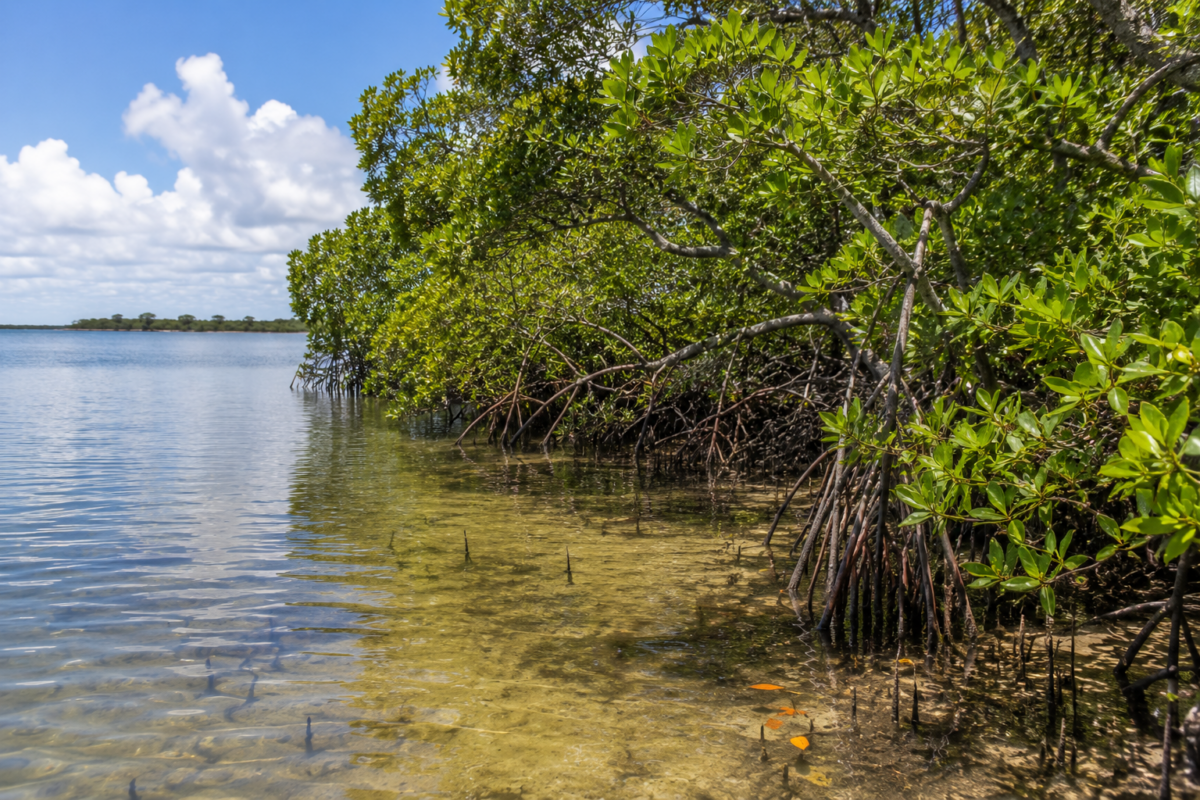
Red mangroves are perhaps the easiest for visitors to recognize because of their distinctive prop roots. Black mangroves can excrete salt through their leaves, while white mangroves generally occur farther inland within the intertidal environment.

Together, these trees form remarkably valuable coastal habitats.

Florida Mangroves Help Stabilize Shorelines

One of the most important functions of Florida mangroves happens around their roots.

Mangrove root systems slow the movement of water and help trap sediment. This can reduce erosion and stabilize shorelines.

The Florida Department of Environmental Protection explains that mangrove forests help reduce erosion caused by waves, tides, currents, and storm surge.

UF/IFAS similarly notes that the dense root systems can slow water movement during storm surge and dissipate wave energy.

In a coastal state regularly exposed to powerful storms, that natural protection matters.

They Provide Habitat for Young Fish

Look underneath the water around mangrove roots and another important function becomes clear.

The complex network creates shelter for aquatic life.

Florida DEP notes that mangroves provide nursery habitat for many fish and shellfish species. UF/IFAS also explains that mangrove roots provide shelter for many recreationally and commercially important fish species in Florida.

Young fish can use the tangled habitat for protection while they develop.

That means the trees lining a shoreline can influence ecosystems extending well beyond the visible mangrove forest.

Mangroves Support Birds and Other Wildlife

The benefits aren’t limited to animals underwater.

Mangroves provide shelter, nesting areas, and habitat for numerous wildlife species. Florida DEP identifies coastal birds including great egrets, little blue herons, and brown pelicans among species that can use mangrove environments.

For visitors interested in birdwatching or wildlife photography, mangrove areas are therefore worth observing carefully.

As always, wildlife should be viewed from an appropriate distance, particularly around nesting birds.

They Help Maintain Water Quality

Mangroves also work as natural filters.

Florida DEP explains that mangrove forests can remove nutrients and pollutants from stormwater runoff before those substances reach habitats such as seagrass beds and coral reefs.

UF/IFAS describes mangroves as important filters that help maintain water clarity for nearby marine ecosystems.

It is a good reminder that coastal ecosystems are connected. What happens along the shoreline can influence environments farther offshore.

Mangroves Can Reduce Coastal Flooding and Storm Impacts

Mangroves cannot stop hurricanes or eliminate coastal flooding, but research shows that they can help reduce some impacts.

Their roots and vegetation slow moving water, while mangrove environments can absorb and hold water.

UF/IFAS reports research estimating that mangroves prevented about $1.5 billion in storm damage during Hurricane Irma and protected more than 626,000 people across Florida.

This is one reason mangrove conservation has significance beyond wildlife protection.

Healthy coastal ecosystems can also provide practical benefits to nearby communities.

Mangroves Are Moving Farther North

Mangroves are tropical plants, which historically limited their range because they are vulnerable to freezing temperatures.

However, their distribution is changing.

UF/IFAS researchers have documented mangroves becoming more common farther north along Florida’s shorelines as temperatures warm, including portions of the Gulf Coast.

Another UF/IFAS resource notes that mangroves occur as far north as Cedar Key on Florida’s west coast.

For Nature Coast visitors, that makes mangroves an especially interesting part of Florida’s changing coastal environment.

Florida Mangroves Are Protected

Visitors and property owners should remember that Florida mangroves are protected.

Florida regulates mangrove trimming, and property owners may need to follow specific requirements depending on the work being performed. UF/IFAS recommends contacting the Florida Department of Environmental Protection for guidance before undertaking trimming or management.

For visitors, the best approach is much simpler: observe mangroves without disturbing them.

Look Beyond the Trees on Your Next Nature Coast Trip

One of the pleasures of exploring Florida’s Nature Coast is discovering how much is happening within landscapes that initially appear quiet.

Mangroves demonstrate this perfectly.

Their roots help stabilize shorelines. Their branches provide wildlife habitat. Their underwater structures shelter fish. They filter runoff and can help lessen some coastal storm impacts.

So, the next time you encounter Florida mangroves while exploring the Gulf Coast, look beyond their unusual roots and dense branches. You’re looking at an ecosystem performing several important jobs at once.

For travelers using Inglis as a base for exploring the region, Village Pines’ guide to the history of Inglis and its outdoor recreation also provides useful background on the waterways and natural environment that helped shape the area.

The Best Native Plants You’ll Discover While Exploring Florida’s Nature Coast

Florida’s Nature Coast isn’t defined by one landscape. Rivers, wetlands, forests, coastal areas, hammocks, and other habitats come together across this part of the state, creating conditions for an impressive variety of plant life.

For visitors, learning to recognize a few Florida native plants can make a hike, wildlife outing, or drive through the Nature Coast more interesting.

Instead of seeing a wall of greenery, you begin noticing how different plants fit into the landscape around you.

What Makes a Plant Native to Florida?

UF/IFAS defines plants as native to Florida if they were present here at the time of European contact in the early 16th century. Florida has more than 2,400 native plant species.

These plants have adapted over long periods to the state’s soils, rainfall, temperatures, and ecosystems.

However, that doesn’t mean every Florida native grows everywhere in the state. Different species are associated with different habitats, including flatwoods, hammocks, swamps, scrub, and coastal areas.

That’s part of what makes exploring the Nature Coast interesting.

Cabbage Palm

Few plants look more unmistakably Floridian than the cabbage palm, also known as the sabal palm.

It is Florida’s state tree and can be encountered across a wide variety of landscapes.

Its tall trunk and fan-shaped leaves make it relatively easy for visitors to recognize. Cabbage palms also contribute habitat and food resources for wildlife.

Because they occur in different environments, you may notice them while exploring wooded areas, roadsides, or places closer to the coast.

Live Oak

Another tree strongly associated with Florida landscapes is the live oak.

Mature live oaks can develop broad, spreading branches that create impressive natural canopies. In humid environments, those branches may also support mosses, lichens, ferns, and other plants.

For visitors interested in nature photography, mature oaks can make particularly striking subjects, especially early or late in the day when sunlight filters through their branches.

Saw Palmetto

Closer to the ground, saw palmetto is another plant you may encounter in Florida’s natural areas.

Its fan-like leaves often form dense growth beneath taller trees, particularly in flatwoods and other suitable habitats.

Saw palmetto is an excellent example of why looking beyond the largest trees can make a nature walk more interesting. Florida’s landscapes are layered, and lower-growing vegetation can be just as characteristic as the canopy above.

Wax Myrtle

Wax myrtle is another native plant found in Florida.

This evergreen shrub or small tree can grow in a variety of environments and plays a role in natural plant communities.

UF/IFAS also identifies native shrubs such as wax myrtle among coastal plants that can help stabilize soils and function as windbreaks.

For wildlife watchers, native shrubs are worth paying attention to because vegetation can provide food, shelter, and nesting opportunities for birds and other animals.

Native Mangroves

As you move toward suitable coastal and tidal environments, the plant communities begin to change.

Florida has three native mangrove species: red mangrove, black mangrove, and white mangrove.

Mangroves are especially interesting because they have adaptations that allow them to survive environments that many other trees cannot tolerate.

Black mangroves, for example, can excrete excess salt through glands on their leaves. Red mangroves are recognizable for their distinctive prop roots.

These plants aren’t simply interesting to identify. They perform important ecological functions along Florida’s coast.

Why Native Plants Matter to Wildlife

Learning about Florida native plants also helps visitors understand wildlife.

Plants form the foundation of habitats. They provide shelter, nesting locations, shade, seeds, fruits, nectar, and other resources used by animals.

That means birdwatching and plant identification often go together.

When you begin recognizing different vegetation, you can also start noticing which birds and animals tend to appear around particular habitats.

Turn a Nature Walk Into a Plant-Spotting Adventure

You don’t need to be a botanist to enjoy identifying plants.

Start with several easily recognizable species and gradually expand what you know.

Taking photographs can help, but avoid removing flowers, leaves, or plants from protected natural areas. Stay on designated trails where required and leave vegetation where you find it.

Official resources from UF/IFAS can also help you learn more about Florida’s native species.

Explore the Nature Coast at a Slower Pace

The Nature Coast rewards people who pay attention.

A river trip might initially be about fishing. A trail walk may start as exercise. But once you begin recognizing Florida native plants, you start seeing the landscape differently.

That makes plant identification an easy addition to an RV trip based around nature and outdoor recreation.

While staying in Inglis, you can also learn more about how the surrounding rivers and landscapes influenced the community through Village Pines’ article on the history of Inglis, Florida.

The more you understand about the plants around you, the more there is to discover every time you head outside.

Where outdoor enthusiasts and nature lovers alike can indulge in a perfect blend of relaxation and adventure.